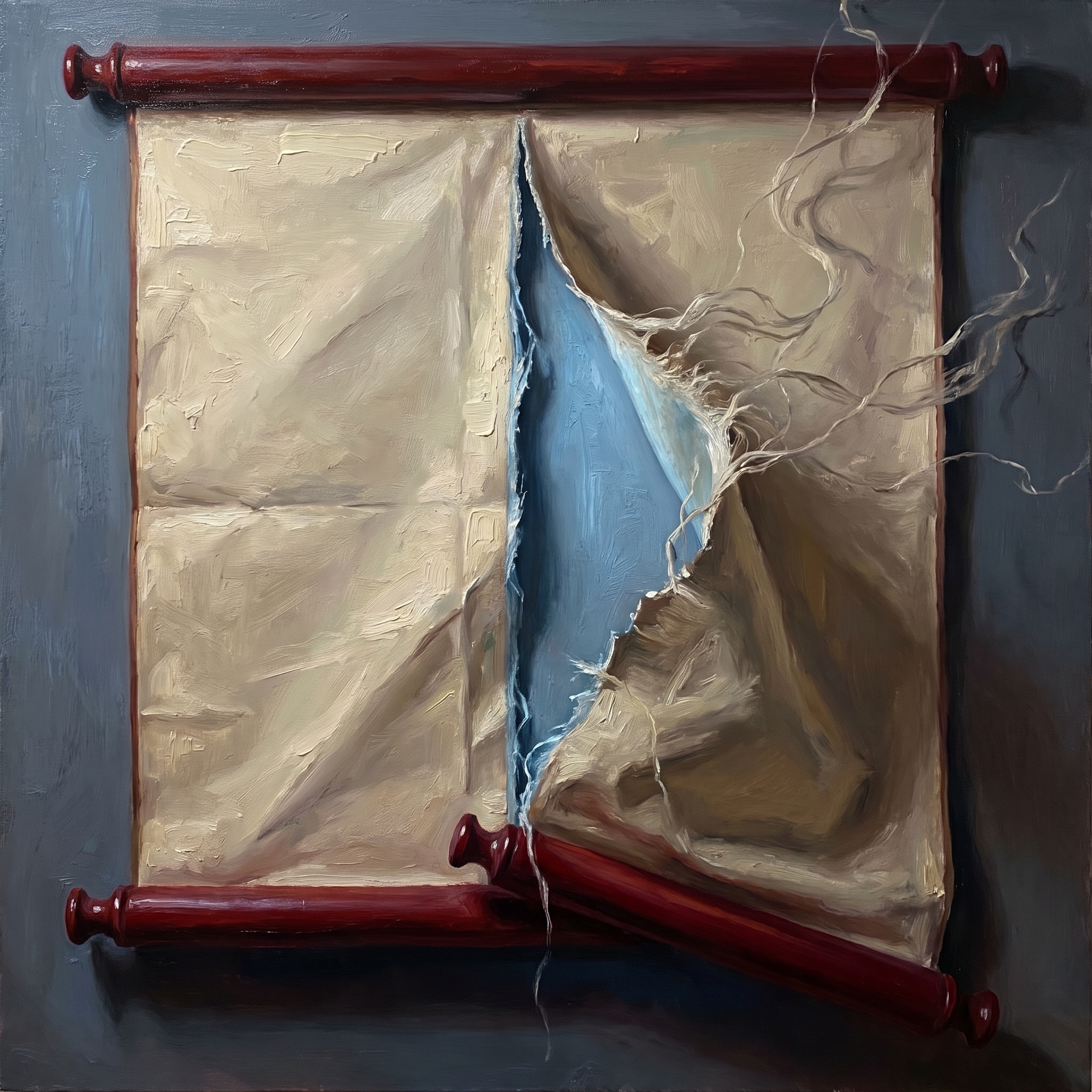
Hana Field: Hey, quick question before we get going — have you ever signed something you knew the other person was reading completely differently than you?
Iris Holm: Every rental agreement I've ever seen. Why?
Hana Field: Because that's — and I don't mean this as a metaphor, I mean it almost literally — that's what Kakuei Tanaka and Zhou Enlai did when they signed the 1972 China-Japan Joint Communiqué. And fifty-four years later, on September 30th, 2026, Chinese Foreign Ministry spokesman Guo Jiakun stands at a podium and tells Japan to honor its commitments under that document. And China Daily amplifies it the same day. And I'm sitting here thinking: what commitment? Both sides wrote this thing.
Iris Holm: Guo Jiakun called Japan's recent actions a 'blatant challenge to China's state sovereignty.' That's not a diplomatic complaint — that's a claim of violation.
Hana Field: Of a treaty that Japan says it's still honoring.
Iris Holm: Right — and here's the actual puzzle. Japan is probably not wrong. China is probably not wrong. The document, specifically its language around Taiwan, was engineered to allow both readings simultaneously.
Hana Field: So the question this whole thing turns on is — can a treaty do real work for fifty-four years if both sides are secretly reading it as their own victory?
Iris Holm: That's what we're here to find out.
Hana Field: Both sides are reading it as their own victory, fine, but how does that actually work in the language? What did they literally write?
Iris Holm: Two neighbors. They're disputing a fence line. One says: 'I fully understand and respect your view of where the property ends.' That's not 'I agree the line is where you say it is.' That's not even close. That's what Japan put in the 1972 Joint Communiqué — 'fully understands and respects' China's position on Taiwan. Not 'recognizes.' Not 'endorses.' And that word choice was deliberate.
Hana Field: Wait — we know it was deliberate? Like, someone said that out loud?
Iris Holm: Takakazu Kuriyama. Director of Japan's Foreign Ministry Treaty Division in 1972 — the actual lawyer in the room. He confirmed it in authoritative written analysis afterward. Japan did not accept the One China principle when it used that phrase. The ambiguity wasn't a drafting oversight. It was the product.
Hana Field: So Tanaka and Zhou Enlai both left that room knowing the document said two different things to two different governments.
Iris Holm: Signed September 29th, 1972. And then — and this is the part that really matters — six years later the 1978 Treaty of Peace and Friendship comes along, and instead of resolving any of it, it just says the 1972 communiqué's principles should be 'strictly observed.' They locked the ambiguity in. Made it the permanent legal floor.
Hana Field: So who was supposed to fix it eventually? Was there ever a — and I mean, someone must have thought about this — a point where someone was supposed to come back and clarify?
Iris Holm: Nobody. That's the answer. Adam Liff's 2022 China Quarterly study traces fifty-plus years of this formula functioning — and his argument is essentially that the mechanism worked precisely because nobody had to fix it. You defer the unresolvable dispute. You don't schedule a resolution. And it held — until Japan's defense posture and Taiwan's actual geopolitical weight made the cost of that deferral higher than the cost of naming it.
Hana Field: The Potsdam Declaration is even in there, in the communiqué, as Japan's stated basis for its Taiwan position. So the document is doing this incredible amount of work, holding all these incompatible things, and it does it for fifty-four years, and then Sanae Takaichi says the words 'Taiwan contingency' in parliament in November 2025 and suddenly the scaffolding shows.
Iris Holm: Because that scaffolding showing isn't a metaphor, it's a legal crisis with no court. China's Foreign Ministry in December 2025 cited the communiqué's 'clear provisions on the Taiwan question' as affirming PRC sovereignty. Japan would call that a misreading. But there's no tribunal. No mechanism. Nothing.
Hana Field: Wait — there's genuinely no body that can settle what 'understands and respects' actually obligates Japan to do?
Iris Holm: None. Kuriyama's written analysis is authoritative inside Japan's Foreign Ministry. It means nothing in Beijing. And Beijing's reading is authoritative inside Zhongnanhai. So you have — and this is the structural problem — two governments wielding the same sentence as legal proof of opposite facts.
Hana Field: So picture — and I keep thinking about this — a Japanese diplomat, 2026, two in the morning, she's got Beijing's anniversary statement landing in six hours and she's reading the actual 1972 text trying to figure out what her government committed to. And the answer is... she can't know. The document was written so she couldn't know. That's not a translation problem, that's the design.
Iris Holm: And whatever she concludes, Beijing will say she's wrong and cite the same paragraph.
Hana Field: So what does the agreement actually do, then? Like, functionally — if it can't be adjudicated?
Iris Holm: For fifty-four years it did exactly one thing — it kept both governments performing fidelity to a document neither fully believed in. Wang Yi frames Japan's whole defense buildup as a challenge to the postwar order anchored in 1972. Japan says it's honoring the letter. Both statements are technically defensible. That's — I mean, that's not diplomacy failing. That's diplomacy working until the stakes got too real.
Hana Field: And the moment where the stakes got real — that's actually what's coming, isn't it. Takaichi in parliament, the formal protest, Kihara's reaffirmation — that's where you see what happens when both sides try to cash the same check.
Iris Holm: And one of them is going to find out the account is empty.
Hana Field: But Takaichi didn't just — I mean, this wasn't a think-tank paper. She said it in parliament. November 2025. A sitting prime minister naming a Taiwan contingency as a 'survival-threatening situation' for Japan. That's the phrase that unlocks expanded military powers under Japanese law. She said that out loud.
Iris Holm: That's the crossing. Not the defense budget. That.
Hana Field: And China's response was immediate — 'seriously violate the spirit of the 1972 agreement.' Not a gentle note. A formal protest.
Iris Holm: Right, but then Takaichi walked it back. Called it 'hypothetical.' Said she'd refrain from similar statements. Which sounds like de-escalation — except Kihara steps in the same window and reaffirms Japan's commitment to the 1972 communiqué while not retracting one word of the underlying logic. So Japan actually made two statements simultaneously true: we honor the document, and a Taiwan conflict is a survival threat.
Hana Field: Wait — that's not a contradiction to Japan?
Iris Holm: No, because the communiqué never prohibited Japan from having a security posture. The ambiguity cuts that way too. Japan can say: we respect your position on Taiwan's sovereignty, and separately, if a war breaks out there we will respond. Those are — actually, no, they're not legally inconsistent under Kuriyama's reading. They're politically explosive, but legally defensible.
Hana Field: And Wang Yi's response to all of this is to tie the Taiwan remarks to Japan's defense spending increases — framing the whole thing as remilitarization challenging the postwar order. So Beijing is — and this is the part that feels almost like a mirror — doing the exact same move. We honor the document, and you're the one violating it.
Iris Holm: Both sides weaponizing the treaty in real time. That's not the framework cracking. That's both sides confirming it's already cracked — and performing fidelity to it anyway, because the alternative is naming what this actually is.
Hana Field: Which is — what is it, exactly? Like if you strip the performance away?
Iris Holm: A pressure instrument. That's what it is now. Guo Jiakun didn't hold that September 30th press conference to commemorate anything. You don't demand compliance with a document that settled something. You demand compliance when it hasn't — and you need the anniversary to give the demand weight.
Hana Field: And that's — actually, I think that's the click for me. If the 1972 communiqué had actually resolved the Taiwan question, China Daily doesn't run coordinated anniversary coverage urging Japan to honor it. The anniversary becomes a pressure lever only because the ambiguity that served Beijing for fifty-four years stopped serving them. They're not celebrating the document. They're admitting it failed on their terms.
Iris Holm: It succeeded at exactly what it was built to do. Buy time. The time ran out.
Hana Field: Tanaka and Zhou Enlai probably knew that, somewhere. And they signed it anyway, because fifty-four years of postponement was worth more than a fight they couldn't win in 1972. I don't know if that's cynical or just honest.
Iris Holm: Probably both. Good talk.