Hana Field: Hey, you make it through the week okay?
Iris Holm: Barely. You sent me a rabbit hole at eleven PM and I'm still in it.
Hana Field: That's — yeah, I couldn't not, because the thing that got under my skin is this: Czechoslovakia wasn't just forgotten at the Munich Conference. Hitler made their exclusion a condition of Germany showing up at all. Like, Chamberlain and Daladier accepted that bargain before anyone sat down.
Iris Holm: Wait — a precondition?
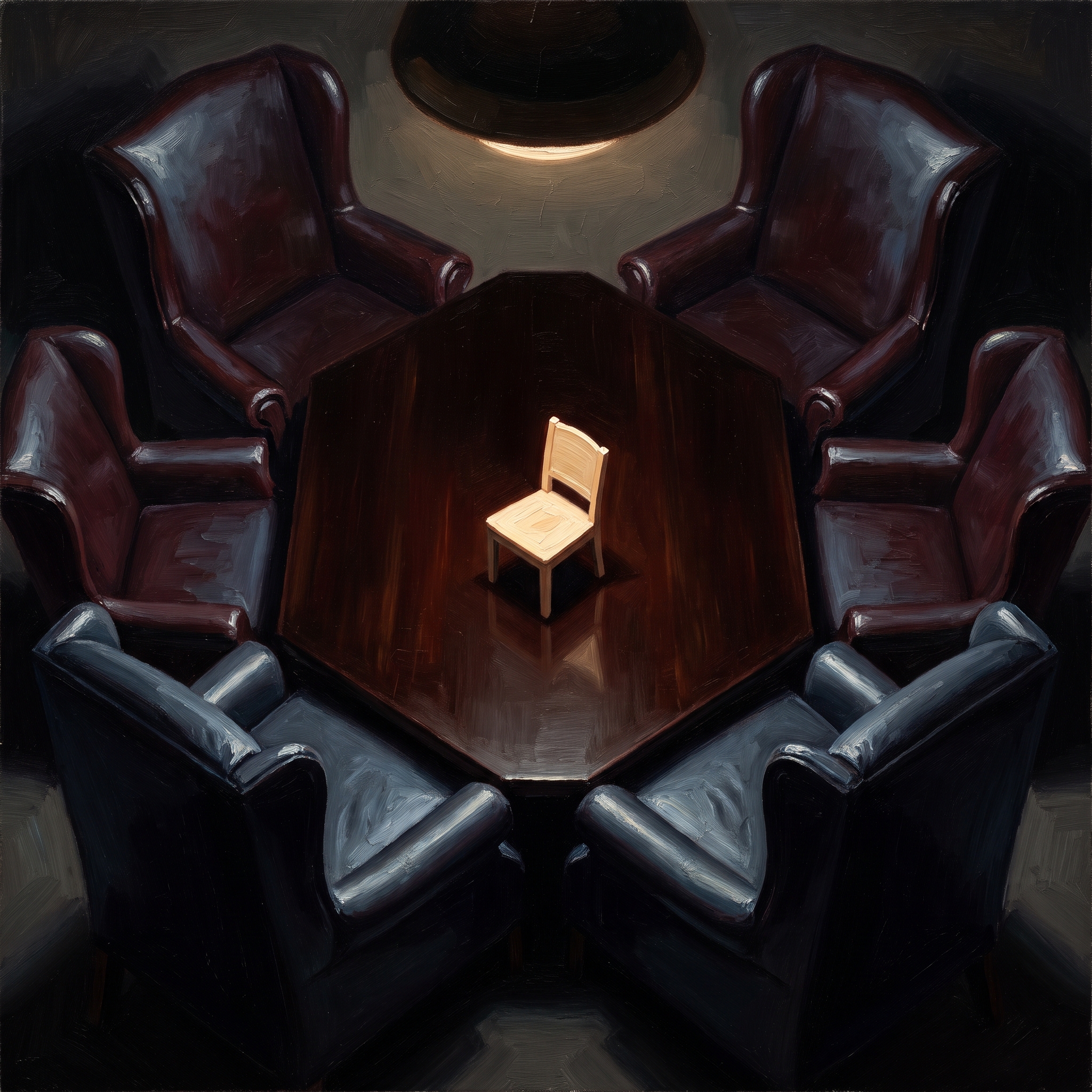
Hana Field: A precondition. And so on the twenty-ninth and thirtieth of September, 1938, Chamberlain, Daladier, Hitler, Mussolini — they sign the Munich Agreement, they transfer the Sudetenland to Germany, and Czechoslovakia, the country whose borders are literally being redrawn, is not in the room. Not late to the table. Not consulted afterward. Structurally locked out.
Iris Holm: And the Sudetenland wasn't just territory — that's where the defensive fortifications were. The industrial capacity. The whole line.
Hana Field: All of it, gone, without Czech consent. And then every U.S. president since Truman has reached for this exact moment to justify policy — which, okay, that's interesting — but hawks and doves have used it to argue opposite positions at the same time. So what I keep wanting to figure out is: which lesson is Munich actually teaching, and who gets to decide?
Iris Holm: Right. And if the analogy pulls in two directions simultaneously, is it a lesson at all — or just a rhetorical blank check.
Hana Field: And that blank-check quality is exactly the mechanism I want to name, because — think about it like a landlord sitting down with a developer to negotiate over a tenant's apartment while the tenant waits outside. The deal gets done, everyone shakes hands, they call it a compromise. The tenant loses their home. That's Munich.
Iris Holm: One sentence: powerful parties externalize the cost of their bargain onto the party with the most at stake.
Hana Field: Exactly that. And Hitler had already been escalating the ask for weeks before Munich even convened — Berchtesgaden, then Bad Godesberg, each meeting a bigger demand than the last. Churchill described it later as Hitler asking for a pound, then two pounds, before settling for one pound seventeen shillings and sixpence. Every concession just moved the floor.
Iris Holm: Wait — France had a defense agreement with Czechoslovakia and still signed the transfer?
Hana Field: Daladier co-signed it. France held a treaty, Czechoslovakia held a treaty with the Soviet Union, and neither enforced anything. Daladier put his name on the Munich Agreement instead of honoring the commitment France had already made.
Iris Holm: And the Soviet Union?
Hana Field: Not invited. Not even in the building. Chamberlain and Daladier accepted Hitler's precondition — no Czechoslovakia, no Soviet Union — and then negotiated as if they were the injured party making a painful sacrifice, when actually they were just... deciding for someone else.
Iris Holm: So the Sudetenland goes — defensive line, industrial capacity, all of it — and the two parties with actual treaty obligations to prevent that just co-sign the transfer.
Hana Field: And they called it peace. Chamberlain flew home saying exactly that. And the thing that I mean — the part that still lands hard — is that Czechoslovakia had a functioning army, real fortifications in that border region, and allies on paper. The exclusion wasn't a side effect of the deal. It was the condition that made the deal possible in the first place.
Iris Holm: But here's where the clean version breaks — some historians argue Chamberlain wasn't naive. That he couldn't fight Hitler in 1938 because Britain genuinely wasn't ready.
Hana Field: And that's the uncomfortable part, because — C. Ervin put this into a 2021 reassessment and made it a real argument. Militarily unready. Not cowardly. Actually unready. And if you sit with that for a second, you start to see how Chamberlain returning home saying 'peace for our time' wasn't cynical spin — crowds celebrated in the streets, genuinely relieved, people wept. That's not a cover story. That's belief.
Iris Holm: No, I don't buy that as a defense. What did they buy time with?
Hana Field: The Sudetenland. The fortifications. The entire Czech defensive buffer — that's the currency of the delay.
Iris Holm: Right — so you hand the aggressor the keys to the next room and call it preparation. And then March 1939 happens.
Hana Field: Six months. Germany occupies the remainder of Czechoslovakia in March 1939 — six months after Munich — and the agreement has already answered its own question. Hitler wasn't satisfied. The delay bought nothing except the transfer. And then September 1939, the war starts anyway.
Iris Holm: So the rational-delay argument collapses the moment you ask what was spent to buy the time.
Hana Field: And yet — I mean, this is the part that won't let me go — understanding the constraint doesn't erase the cost. Those two things aren't opponents. Daladier lands in Paris after Munich and crowds cheer him, and he apparently said privately he thought they were fools for cheering. He knew. And still signed. That gap between knowing and signing — that's where the real weight lives, not in whether the military math was close.
Iris Holm: And that gap is exactly what gets erased when the analogy gets weaponized later — Suez, Iraq, all of it — which we should get into, because the way Munich gets selectively invoked to argue opposite things at the same time is a different kind of failure entirely.
Hana Field: And that selective invocation — the strangeness is in how the first time someone reached for Munich as a template wasn't even close to the same situation. Anthony Eden, House of Commons, September twelfth, 1956, arguing Britain cannot appease Gamal Abdel Nasser over the Suez Canal. Nasser is the new Hitler. The canal is the Sudetenland. And you can almost see it — Eden at the dispatch box, genuinely believing the frame fits.
Iris Holm: Nasser nationalized a canal. Hitler was annexing countries.
Hana Field: Structurally — completely different. But Munich had become, by 1956, a kind of pass-phrase. You say it, the room stops arguing. And then fifty years later, 2002, 2003, the Bush administration slides the same memo across the table — Saddam Hussein, Munich, don't appease — and it works again. Peter Conolly-Smith at Queens College actually documented this, how the frame got mapped onto a context that bears almost no resemblance to 1938.
Iris Holm: And critics used the same analogy simultaneously to call U.S. policy the aggression.
Hana Field: Same word, opposite direction, same year. Gerhard Schröder's whole 2002 anti-war campaign basically turned Munich around — the aggressor invokes Munich to justify the invasion, and the argument still works because the analogy is so elastic it can mean whatever the speaker needs it to mean.
Iris Holm: That's the tell. When a historical argument can prove contradictory conclusions simultaneously, it's not reasoning anymore. It's a password.
Hana Field: And the half that gets dropped — every single time — is the second lesson. The one about not bargaining smaller allies away. Munich has two lessons, and one of them, the 'don't sacrifice the Czechoslovakias,' has basically vanished from the invocations entirely.
Iris Holm: Because that lesson inconveniences the powerful party citing it.
Hana Field: Exactly — and so what remains is only the half that says force is always justified, diplomacy is always weakness, and whoever you're confronting is always Hitler. Which doesn't illuminate 1938. It just — forecloses the conversation before it starts.
Iris Holm: So next time someone says Munich — the question isn't whether you're for or against appeasement. It's who isn't in the room. And who decided they shouldn't be.
Hana Field: And that's the thing that stays with me, because — the exclusion of Czechoslovakia wasn't an oversight that could've been fixed with a better agenda. Hitler made it a condition of Germany showing up at all. The structural cost was paid before a word was spoken. Before anyone sat down. That's not a footnote to Munich. That's the architecture of it.
Iris Holm: And that lesson keeps getting lost. Every time.
Hana Field: You sent me a rabbit hole at eleven PM, you said. And I think — yeah, I think this is what was at the bottom of it. Not the agreement itself. The moment before. The handshake that accepted the precondition. That's where the thing actually happened.
Iris Holm: Still in it, honestly. Thanks for dragging me down.