Mark Delaney: Michael — okay, so my kid asked me this week why the city never fixes our street even though we pay taxes, and I had this whole answer ready, and then I realized the real answer is actually the opposite problem in some countries: what happens when a government doesn't collect taxes at all?
Michael C. Vincent: Well — that is not a small question from a child.
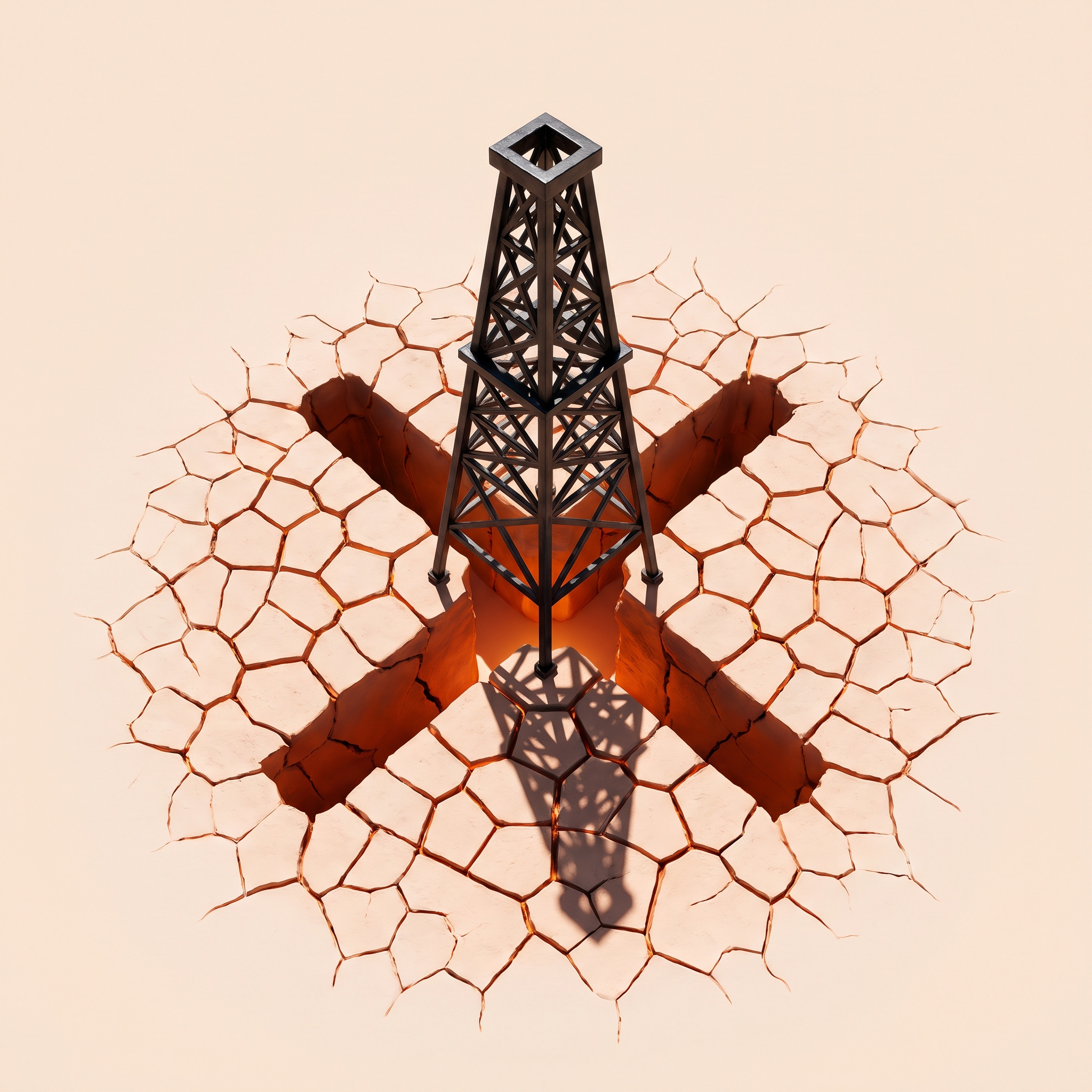
Mark Delaney: It really wasn't, no. Because once I started pulling that thread I ended up at the Resource Curse, which is — uh, the core idea is this: having a lot of natural wealth, oil, minerals, metals, it often makes countries govern worse, not better. Nigeria, Venezuela — massive resource revenues, deeply troubled institutions.
Michael C. Vincent: And then there's Rwanda sitting quietly in the corner with almost no oil, almost no minerals, building a tax system that rivals states far wealthier.
Mark Delaney: Which is — that's the thing that broke my brain a little. How is the poor country doing the institutional work that the rich country skips?
Michael C. Vincent: Because when a government can fund itself through extraction — oil pumped, sold, deposited — it never has to ask its citizens for a cent. And the moment you don't need to ask, you lose the pressure to explain yourself. That relationship, government taxes citizens, citizens demand accountability in return, that is how representative governance historically gets built. Resource wealth lets you opt out of it entirely.
Mark Delaney: So it's not that oil is bad. It's that oil is an exit ramp from the bargain.
Michael C. Vincent: Exactly so. And Rwanda — with nothing to extract — couldn't take that exit.
Mark Delaney: Which brings me back to my kid's street — because honestly, the pothole question and the Nigeria question are kind of the same question. Who do you have leverage over, and why?
Michael C. Vincent: And Michael Ross's research suggests that where resource dependence is high, that leverage structurally disappears — not weakens, disappears. That is what makes the Rwanda inversion so unsettling. It suggests the whole thing was a choice all along.
Mark Delaney: And 'structurally disappears' is the part I keep tripping over — like, what does that actually look like on the ground? Because disappears sounds almost too clean.
Michael C. Vincent: Picture it. European rulers — kings, princes, whoever — they needed money to fight wars. That meant going to merchants, landowners, the people who actually had coin. And those people said, fine, but we want something back. A say. A ledger. Some proof you're not wasting it. That is not an ideological statement about democracy — that is a transaction.
Mark Delaney: It's just leverage. Basic leverage.
Michael C. Vincent: Parliaments, transparency, accountability — they come out of that pressure. Not out of enlightenment values. Out of fiscal need. The taxation–representation bargain. And the rentier state — a government living almost entirely off resource rents paid by outside buyers — that state never enters the bargain. It never needs to knock on the door.
Mark Delaney: So citizens don't even get a seat at the table, because they never — wait, they never funded the table in the first place.
Michael C. Vincent: That is Ross's finding exactly. Cross-national, across geographies, across decades — resource dependence and weaker democratic institutions, consistently. The correlation isn't subtle.
Mark Delaney: And that's — okay, that's the political resource curse, right? Not just slow growth, but oil specifically strengthening autocratic rule.
Michael C. Vincent: Yes — and it operates exactly through that rentier mechanism. No taxation, no leverage, no accountability demanded. The bargain just never happens.
Mark Delaney: Which is — uh, okay, so here's where Rwanda breaks my brain all over again. Rwanda has to tax. It's poor, it doesn't have oil, so the government actually needs citizens' money. And so the relationship — I mean, by this logic — the relationship has to be different.
Michael C. Vincent: It is the bargain working in reverse proof. Fiscal pressure from citizens drives the institution-building. Rwanda didn't choose accountability as a philosophy — it was structurally compelled into it.
Mark Delaney: Which is kind of uncomfortable, right? Because it means the escape from the resource curse isn't — it's not a values thing. It's not that Norway is virtuous and Nigeria isn't. It's about whether you ever needed the bargain to survive.
Michael C. Vincent: Now, the record is murkier than that — and that is where this gets genuinely complicated. Norway had democratic institutional muscle well before North Sea oil arrived. So did the strong pre-existing institutions constrain the temptation? Or did Rwanda stumble into discipline because scarcity left no exit? Those are different stories with very different implications.
Mark Delaney: So we don't actually know if scarcity builds institutions, or if institutions just survive scarcity better — ugh, that's the uncomfortable version of this whole thing.
Michael C. Vincent: And this is what the previous beat doesn't quite capture — it's not just that the bargain gets skipped. These states actively build a replacement system. Something that looks like a social contract but isn't.
Mark Delaney: Wait — a replacement? Like, deliberately?
Michael C. Vincent: Take the Gulf monarchies. Energy priced far below market rates — subsidized fuel, subsidized electricity — citizens pay almost nothing for it. Now, that is not generosity. That is political engineering. You are buying structural dependence, not building civic empowerment.
Mark Delaney: So instead of citizens funding the government and demanding something back, the government is — uh, it's running it in reverse. Giving stuff down, and that buys silence.
Michael C. Vincent: Exactly so. And the citizen who fills up their car for almost nothing — they're not civically leveraged. They're dependent. That's the substitution.
Mark Delaney: And Angola is — I mean, Angola's really concrete, right? Because they're not just doing energy subsidies. The whole financial sector got reshaped around this idea. From 1991 to 2014, the financial sector there — it wasn't developing the economy, it was just maintaining the ruling coalition. Like, the banks exist to route the oil rents to the right people.
Michael C. Vincent: Picture a port administrator in Angola in 2008. Oil revenue flows into the central account. The financial architecture around him is configured — not to push capital toward agriculture or manufacturing — but to keep the coalition that controls the oil intact. No citizen tax base. No public ledger he has to answer to.
Mark Delaney: And the pothole outside his office stays unfilled. Not because nobody noticed — because there's no mechanism that makes it anyone's problem.
Michael C. Vincent: And Nigeria runs the same pattern at scale — patronage networks absorbing rents that never build institutional capacity. Venezuela too. These aren't failures of imagination. They are functioning systems, optimized for a different goal.
Mark Delaney: Which is — yeah, no, that reframes it completely. It's not neglect, it's construction. Active construction of something that isn't accountability.
Michael C. Vincent: The framing that captures this — particularly in the Arab world — is the Institutional Curse. Resource wealth degrades institutional quality, and then weak institutions amplify the growth damage from resource dependence. You are not just stuck. The cycle accelerates the stuckness.
Mark Delaney: So it's self-reinforcing. The worse your institutions get, the more the oil hurts you, the less pressure there is to fix the institutions — ugh, that's grim. And whether any country ever escaped that loop from the inside is the question. Whether Norway or Botswana are actually the answer, or just exceptions that prove nothing.
Michael C. Vincent: Well — that is the question that gets genuinely uncomfortable. Because if the institutions have to precede the oil, then the curse is almost total.
Mark Delaney: But Norway being the exception — I mean, that's the part that actually bothers me. Because everyone points to Norway's State Pension Fund Global like, there's the template, that's how you do it. And yeah, it's the world's most prominent sovereign wealth fund, it buffers commodity volatility, diversifies across — what, like seven investment levels — insulates the domestic economy. It's genuinely impressive. But does it prove the model works, or does it just prove Norway was already Norway before the oil showed up?
Michael C. Vincent: And that is the uncomfortable question the literature hasn't cleanly answered.
Mark Delaney: Because if Norway succeeded because it already had democratic maturity — the institutional muscle was there first — then the fund isn't the lesson. The lesson came centuries earlier.
Michael C. Vincent: And Botswana compounds it. A resource-rich developing country, mineral wealth converted into real institutional quality, genuine development. Cited constantly. But Botswana also arrived with something — comparatively stable governance structures, a political culture that wasn't dismantled by the resource windfall. So you have two success cases, and both of them had something before the extraction began.
Mark Delaney: Which means — wait, does that mean the institutional design of the fund almost doesn't matter? Like, the architecture is secondary?
Michael C. Vincent: It may mean the institutional design only works if the soil was already prepared for it. You can't install the precondition retroactively.
Mark Delaney: Okay but — uh, that's where EITI comes in, right? The Extractive Industries Transparency Initiative. Because that's the external fix people reach for when the internal conditions aren't there. Make the flows visible, make extraction legible, and maybe that creates enough pressure from outside to substitute for the missing bargain.
Michael C. Vincent: Azerbaijan. 2010 — joins EITI, signals transparency, the whole international gesture. By 2015, journalists investigating resource flows are being expelled. The extraction became legible. The accountability did not follow.
Mark Delaney: Huh. No kidding — expelled. Not pressured, not fined. Actually expelled.
Michael C. Vincent: Because visibility and leverage are not the same thing. You can make a revenue flow visible without shifting who controls it. The transparency framework doesn't recreate the fiscal bargaining relationship — the one where citizens funded the state and therefore had standing to demand answers. That standing never existed. Making the numbers public doesn't conjure it.
Mark Delaney: So EITI is — I mean, it's not nothing, but it's kind of solving the wrong problem. Like, it assumes visibility creates accountability, but accountability requires leverage, and leverage requires — ugh — that you were part of the bargain to begin with.
Michael C. Vincent: And Colombia is where this gets genuinely destabilizing. Because the developmental failure there — it looks like a resource curse story. But the evidence points somewhere older. Landed elites, international actors, a political settlement that was already captured before extraction became the central economic fact. The power structure explains the outcome more cleanly than the oil does.
Mark Delaney: Hold on — so the resource curse might be a mirror? Not a cause?
Michael C. Vincent: It reflects elite preferences that were already entrenched. The oil doesn't corrupt the system — it finances the system that was already there. That is a very different story.
Mark Delaney: Which means — no, actually, that's darker than the curse framing. Because the curse implies something happened to you. This implies you were already there, and the oil just gave you more runway.
Michael C. Vincent: And that is the chicken-and-egg the research has not solved. Norway's institutions may have survived oil wealth because they chose sovereign wealth fund discipline — or they never faced real pressure to corrupt because the institutional immune system was already mature. We cannot run the experiment the other way. And until we can, the Norwegian model stays a reference case, not a recipe.
Mark Delaney: And that's — I mean, that's the thing that keeps landing for me. Rwanda didn't choose fiscal discipline. Scarcity chose it for them. The bargain wasn't a decision. It was the only door open. And the question I can't shake is — if a resource-rich government could voluntarily install the same thing, ring-fence revenues in a sovereign wealth fund, levy taxes anyway, force the accountability relationship into existence even though they don't need to — why doesn't anyone do that? The mechanism is known. Norway did it.
Michael C. Vincent: And that is the question that doesn't resolve cleanly. If the escape exists — genuinely exists — and no one takes it, then perhaps the resource curse was never really about the oil.
Mark Delaney: It's a mirror. Not a cause.
Michael C. Vincent: It reveals what the people running these states wanted all along. Not accountability — never the bargain. The oil didn't corrupt the preference. It just funded it, and removed the pressure that might have forced a different outcome.
Mark Delaney: Which brings me right back to my kid's street. Because the pothole question and the Nigeria question really are the same question — it's just, in one version you have a government that needs you, and in the other they never did. And the fix isn't a transparency initiative or a fund design. It's whether the need was ever there.
Michael C. Vincent: A child's question about a pothole. And it goes all the way down. Good conversation.