Eliza Ward: Hey. Did you see the Time piece drop?
Brian Reed: Yeah, I did. I've been sitting with it for — hang on, let me just say it out loud. Trump told Time magazine he regrets nominating all three of them. Gorsuch, Kavanaugh, Barrett. All three.
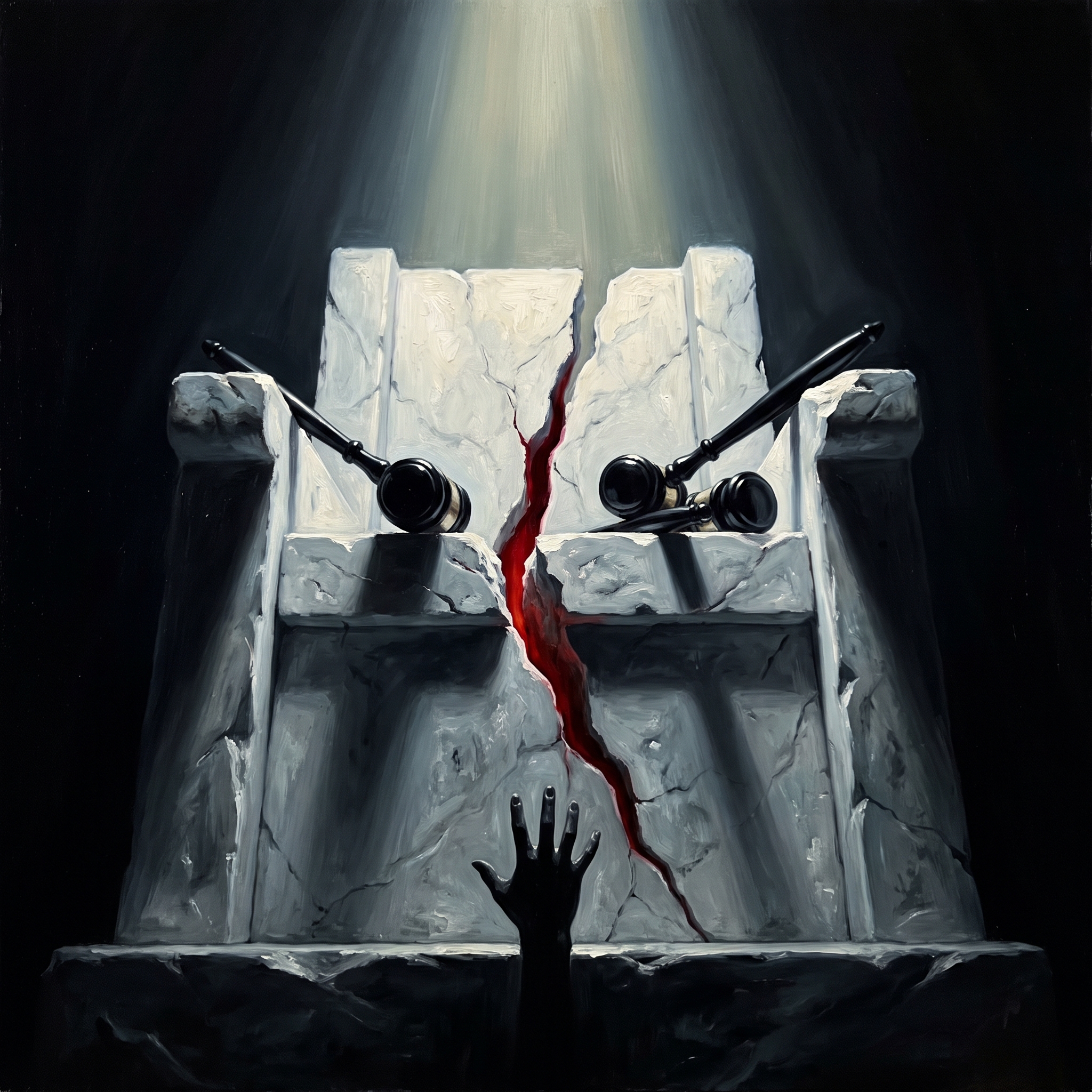
Eliza Ward: All three. And then Truth Social — he posted it there too. Word for word: "These are not the people I interviewed to serve on the United States Supreme Court, they are merely a shell of their original selves."
Brian Reed: "Shell of their original selves." That's — that's a specific thing to say about sitting justices.
Eliza Ward: Right — and here's the part that I keep getting stuck on. His administration has won over 70% of its cases at this Court. That's not a hostile bench. So what is he actually angry about?
Brian Reed: So wait — he's winning seventy-plus percent and he's publicly naming his own picks as failures.
Eliza Ward: That's — yeah. That's the whole thing.
Brian Reed: The part I don't get is what satisfaction would even look like to him. Like, if 70% isn't enough, what number gets you there? Because that changes what this complaint actually is.
Eliza Ward: Okay but the 70% number — it's burying the specific ones he lost. Like, which cases? That's where it breaks open.
Brian Reed: Right — and I think that's actually it. Think of it like a manager who wins most of his quarterly reviews but fails the one his boss personally staked his reputation on. The percentage stops mattering. The tariffs were that case. February 2026, 6-3, and it's not one soft dissenter — it's Gorsuch and Barrett both in the majority against him.
Eliza Ward: 6-3. That's not close.
Brian Reed: Not even a little. And then — wait, let me think through the sequence — birthright citizenship, Kavanaugh in the majority blocking the executive order. Then the Federal Reserve thing, where the Court blocked Trump from firing Lisa Cook.
Eliza Ward: The Lisa Cook block is — actually that one gets underplayed. He tried to fire a sitting Federal Reserve Governor and the Court said no. That's not a policy dispute, that's executive power, full stop.
Brian Reed: And then September 2026. The mail-in voting ruling. U.S. Postal Service restrictions on mail-in ballots — blocked, 7-2. That's the one that triggered his most recent attacks. And I — here's what I can't fit into the disloyalty frame. 7-2 isn't three of his appointees breaking ranks. That's almost the whole bench.
Eliza Ward: Right — you can't name Gorsuch, Kavanaugh, and Barrett as the problem when the vote is 7-2. The math doesn't support the complaint.
Brian Reed: So he's — I mean, he's choosing who to blame. The 7-2 vote is a fact. Saying it's those three specifically is a choice about the story he's telling.
Eliza Ward: Which is what separates what he's actually angry about from what he says he's angry about. The mail-in ruling isn't a loyalty problem — it's almost unanimous. That wrinkle doesn't fit the narrative he posted on Truth Social.
Brian Reed: But that's actually the take I keep seeing — that this is just normal presidential frustration. Reagan grumbled. Obama was annoyed at Roberts on the ACA. Presidents do this.
Eliza Ward: No. I don't buy that framing at all.
Brian Reed: Why not? Where does it break?
Eliza Ward: Because Reagan grumbled privately. He didn't — wait, actually, name the last president who called out sitting justices by name in a magazine interview while those same justices were still deciding active cases. I can't find one. That's the line that's been crossed.
Brian Reed: Okay, but here's where I want to stress-test that. Trump v. Slaughter. All three of them — Gorsuch, Kavanaugh, Barrett — voted with him to overturn Humphrey's Executor. A 91-year-old precedent, gone. These are not hostile justices.
Eliza Ward: Right, and that's — that's exactly the point. They handed him a massive structural win on executive power and he's still publicly naming them as failures. Which means the attacks aren't about the rulings. They're about — I mean, Todd Blanche took this to a White House briefing podium. The Attorney General of the United States stood up and defended Trump's right to publicly pressure the Court. That's not a Truth Social post anymore. That's the executive branch officially on record.
Brian Reed: That's — hang on. Blanche did that at an official briefing?
Eliza Ward: Official White House briefing. Which makes it an executive branch position, not a personal grievance. And that's the escalation — not the substance of what Trump thinks about the tariff ruling, but the method. The institution of the Justice Department is now vouching for the idea that these justices owe the president something.
Brian Reed: And with the October 2026 term just starting — new cases, same three justices in the crossfire — I think what actually changes downstream from that pressure is the part we haven't gotten to yet.
Eliza Ward: That's the thread — the next term is where it either crystallizes or it doesn't. Immigration cases, firearm cases, and Gorsuch, Kavanaugh, Barrett are right back in the middle of it. Watch a 5-4 ruling where one of them crosses. That's the data point.
Brian Reed: But the damage to them specifically is probably limited. Life tenure. They can't be fired. So the real exposure isn't Gorsuch or Barrett navigating a hostile tweet. The real exposure is the next nominee.
Eliza Ward: The next nominee walks into confirmation already knowing the public test isn't 'will you apply the law.' It's 'will you vote the president's way.'
Brian Reed: And that's — I mean, that doesn't arrive as some dramatic moment. It's not a constitutional crisis you can point to. It's just a slow reframe of what the job is, internalized before the oath is even taken.
Eliza Ward: Gradual. Yeah. That's actually the mechanism — not capture through a single ruling but through what future nominees believe they were hired to do.
Brian Reed: And Blanche at that podium is part of that mechanism. Because now it's not Trump venting on Truth Social — the Justice Department has officially said this frustration is legitimate. That's the executive branch putting a frame around judicial loyalty and calling it reasonable.
Eliza Ward: Wait — do we know yet whether that changes anything about how left-leaning legal groups are reading this term? Because I've seen cautious optimism flagged from that side based on last term's mixed outcomes.
Brian Reed: Cautious optimism from groups that spent two years losing. Which is — yeah, that tells you something about the baseline. But we genuinely don't know if the attacks move votes. What we do know is that the 6-3 supermajority Trump built — the very bench he's calling disloyal — is the reality check that should end the conversation about betrayal.
Eliza Ward: He built the majority. He's angry at the majority. The October 2026 term is where we find out if that anger is just noise — or if it's pressure that bends something.
Brian Reed: And that's — I mean, that's where I actually land. Not on whether Trump is right to be angry. On whether the anger is load-bearing. Because if it's just noise, the Court absorbs it and moves on. But if the next nominee has already internalized that loyalty is the job — we won't see a dramatic break. It'll just be a different kind of judge sitting in that chair.
Eliza Ward: Right. And we don't know which one it is yet. That's the honest answer. Trump said it in Time, he posted it on Truth Social, Todd Blanche stood at a White House podium and made it executive branch policy — and the Court has still not moved in any direction we can trace to that pressure.
Brian Reed: What would actually settle it for you?
Eliza Ward: A 5-4 ruling in the October 2026 term where Gorsuch or Barrett is the swing vote — and they break toward Trump on something they would have blocked a year ago. That's the data point. Not a tweet, not a briefing. A vote that moved. Until then, 'shell of their original selves' is Trump's framing, not a finding.
Brian Reed: And if it never moves — if the October term ends the same way the last one did — then the question is just sitting there. Does the loyalty frame stick to the next nominee even when it demonstrably didn't work on these three.