Topic · 18 episodes
Politics
Politics is defined by power, process, and who gets bypassed along the way. Recent coverage spans the Electoral College math that pushes candidates to ignore safe states and flood swing states with resources, to the Trump administration's budget director signaling the White House may bypass Congress to cancel spending unilaterally, to Trump conducting Iran negotiations without legislative input — prompting lawmakers to demand a vote. The through-line: institutional authority is being tested at every level.
Frequently asked
Why do presidential candidates focus on swing states instead of the whole country?
The Electoral College makes most states mathematically irrelevant to the outcome. Candidates concentrate time and money on a handful of competitive swing states because winning those determines victory, while reliably red or blue states are simply banked or conceded regardless of margin.
Can the Trump administration cancel federal spending without Congress approving it?
Trump's budget pick signaled the administration may attempt to bypass Congress to cancel already-approved spending without legislative authorization. That would be a significant challenge to congressional spending authority, and lawmakers have not approved such a move — making it a live constitutional flashpoint.
Did Congress get a say in Trump's Iran deal negotiations?
Trump pursued Iran negotiations without involving Congress, which has prompted lawmakers to demand a vote on any potential agreement. Critics argue that negotiations of this kind should require legislative input, and the standoff reflects a broader tension over who controls U.S. foreign policy commitments.
How is the Trump administration challenging Congress's traditional role?
On two fronts: the administration's budget pick suggested the White House may pursue budget cancellations without congressional approval, and Trump conducted Iran negotiations excluding lawmakers entirely. Both moves have drawn pushback from Congress, reflecting a pattern of the executive branch testing the limits of legislative authority.
Episodes
 Why packing and cracking give mapmakers control over outcomes before votes are castPacking and cracking work as a single machine: opponents are crammed into a few districts they win by landslide, while their remaining voters are spread too thin to win anywhere else. North Carolina's 2016 map was tested across 52 election scenarios and produced the same result — Republicans 10–11 seats out of 14 — every time.
 After Supreme Court blocked Trump's birthright citizenship order, Florida candidate pushes states to act anywayFlorida Republican gubernatorial candidate James Fishback announced on August 7th — eleven days before the primary — that Florida should stop issuing birth certificates to children of undocumented immigrants. The Supreme Court struck down Trump's birthright citizenship order 6-3 in June, but three dissenting justices means the state documentation question remains legally untested.
 Trump's White House ballroom dispute is headed to the Supreme Court after court shutdown orderA D.C. Circuit Court ruled 2-1 on August 7, 2026, that Trump's 90,000-square-foot White House ballroom requires congressional approval, halting construction — but with only a 14-day stay, a Supreme Court emergency filing could resume work before the window closes. The funding source, private or public, was ruled legally irrelevant.
 Appeals court just halted Trump's $400M White House ballroom—says he needs Congress firstA federal appeals court ruled 2-1 on August 7 that Trump cannot build a $400 million, 90,000-square-foot ballroom on the demolished White House East Wing without congressional approval. A Bush-appointed district judge and a Democratic appeals panel agreed: private financing does not transfer Congress's constitutional authority over federal property.
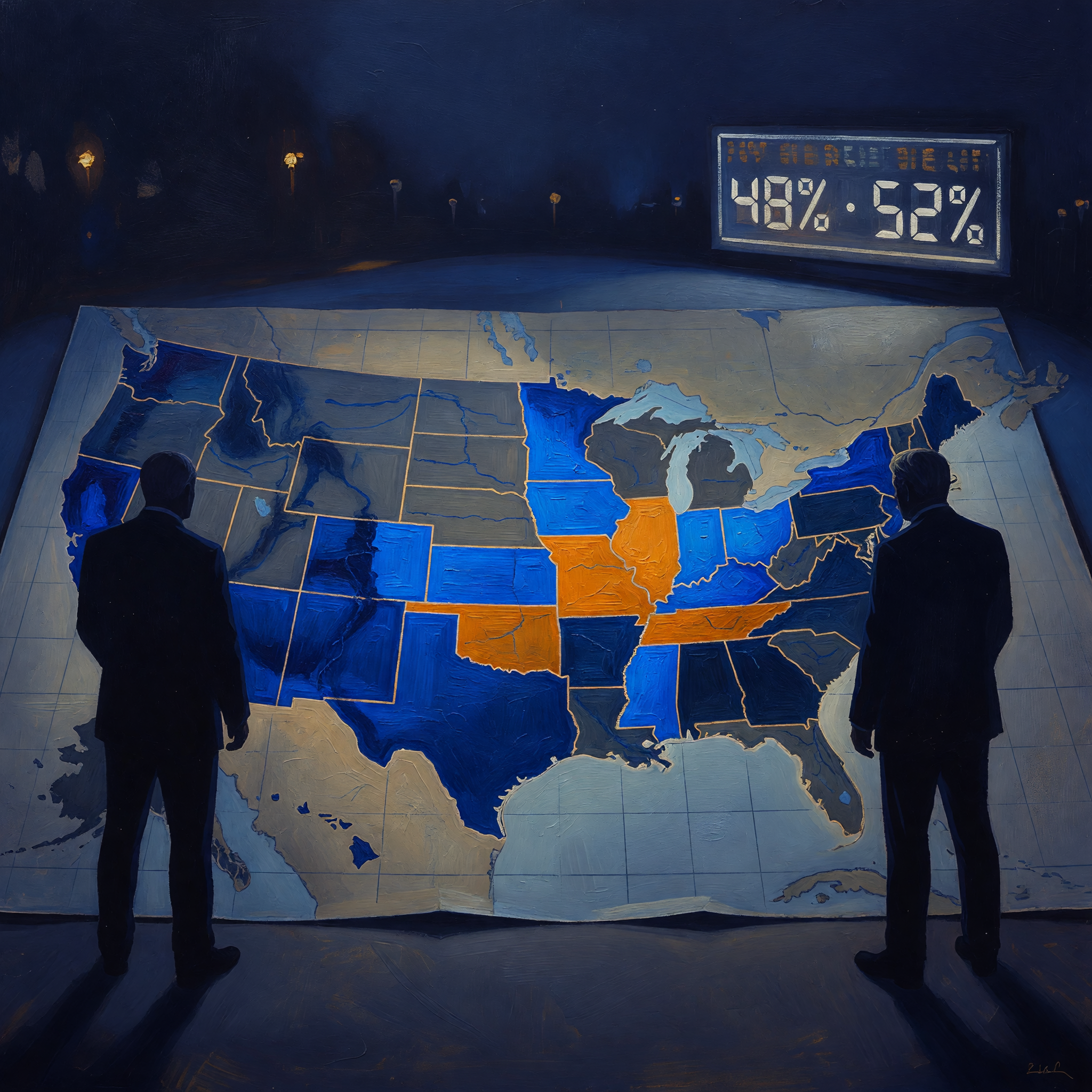 The math of electoral college: why candidates ignore safe states and chase marginsIn 2020, 96% of presidential campaign visits and advertising were concentrated in just 12 states. Under winner-take-all Electoral College rules — used by 48 states — winning by one vote yields the same electoral result as winning by a million, making it mathematically rational for campaigns to ignore every safe state entirely.
 Trump's $10 billion IRS lawsuit—flagged by courts as aimed to 'manipulate' proceedings—is now blocking his own attorney general nomineeOn July 31, 2026, Trump simultaneously declared his $10 billion IRS Anti-Weaponization Fund dead and filed an appeal of the federal ruling that called the lawsuit an 'improper' attempt to manipulate proceedings — while the bad-faith finding and a bar referral against nominee Todd Blanche have stalled his Senate confirmation.
 Amazon pocketed $600 million in Trump tariff refunds and is now returning a portion to customers—revealing how tariff policy flows to corporate bottom linesAmazon received approximately $600 million in U.S. tariff refunds from Customs and Border Protection in May–June 2026, after the Supreme Court struck down Trump's IEEPA tariffs 6-3. Amazon has pledged to return a portion to some customers, but has disclosed no dollar total for those consumer refunds.
 Trump's attorney general pick faces trouble as GOP senators demand he kill his weaponization fundTodd Blanche's attorney general confirmation stalled after Trump publicly defended the $1.8 billion DOJ anti-weaponization fund on July 31, 2026 — directly contradicting Blanche's assurances to the Senate Judiciary Committee. Senators Cornyn and Tillis, both leaving office in January 2027 and no longer subject to Trump's primary-threat leverage, are demanding written DOJ guarantees.
 The structural mechanisms that limit presidential power — and why they sometimes failIn January 2025, the executive branch froze $410 billion in congressionally appropriated funds — despite the Appropriations Clause, the Appointments Clause, and judicial review all being intact. None of these three constitutional checks operate automatically; each requires Congress or the courts to actively invoke them, and that political will was absent.
 Trump returns to the correspondents' dinner Friday after an April shooting forced cancellationThree months after a gunman rushed the Secret Service checkpoint at the original April 2026 White House Correspondents' Dinner — the first Trump ever attended as president — Trump returned July 24 to a rescheduled event at the Waldorf Astoria, formerly Trump International Hotel, one day after his administration withdrew subpoenas against three New York Times reporters following a federal judge's rebuke.
 Trump's SAVE Act is consolidating state voter records into federal hands—here's the scopeThe SAVE Act has already routed 67 million voter registrations through a DHS database built in 1986 for food-stamp eligibility checks — without a Senate vote. The system flagged roughly 10,000 potential noncitizens out of 49 million records checked, but investigators found documented U.S. citizens among the flagged names.
 Trump just hit the UK, EU, and dozens of trading partners with new tariffsTrump's new Section 301 tariffs, effective 12:01 a.m. July 25, 2026, cover 99.4% of U.S. imports across 60 trading partners at 10–12.5%. The seamless handoff from an expiring Section 122 surcharge was deliberate — Section 301 carries no statutory expiration, making this a structural shift, not a temporary measure.
 Trump's sudden tariffs and Iran escalation are sabotaging Republicans' cost-of-living advantageTrump's July 24, 2026 tariff expansion and the U.S.-Iran war closing the Strait of Hormuz pushed national gas prices above $4 — a roughly 30% surge — flipping the congressional generic ballot 7–11 points toward Democrats, erasing Republicans' months-long cost-of-living advantage just 100 days before midterms.
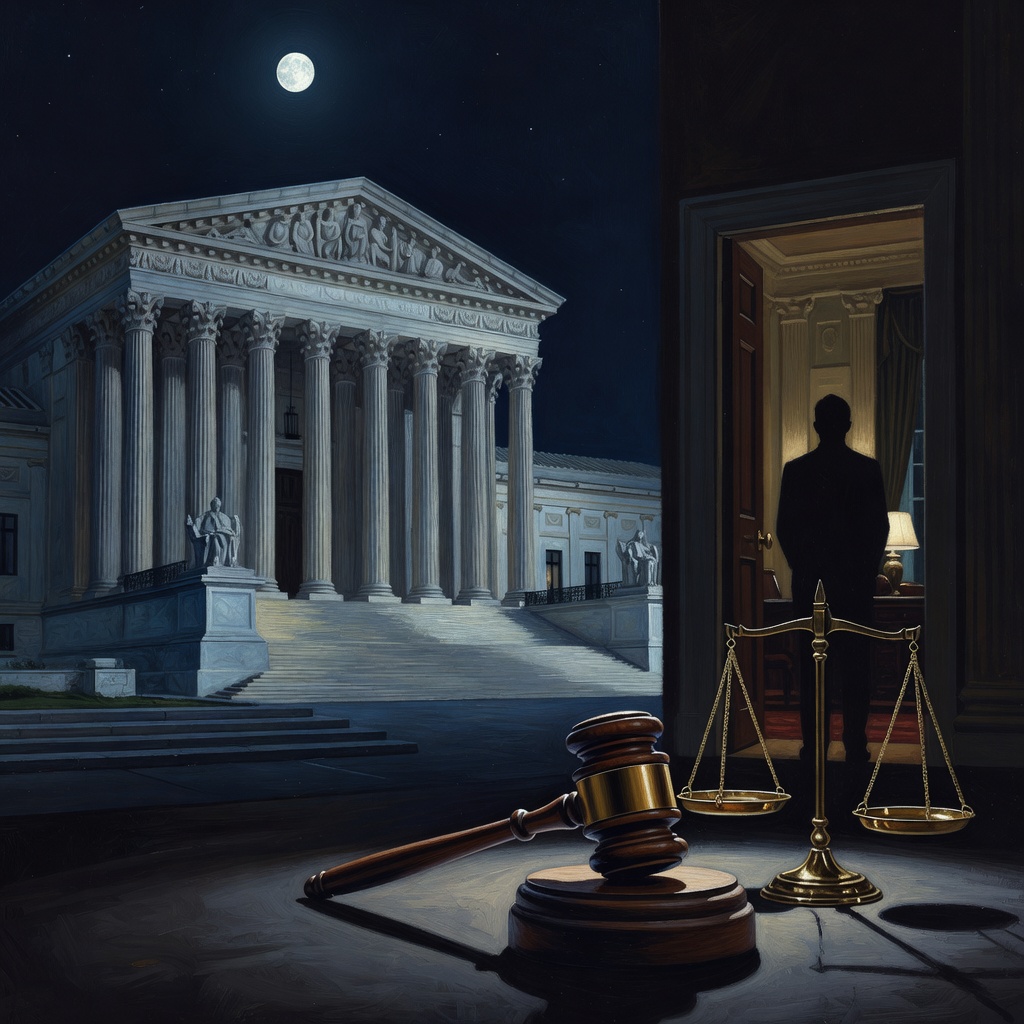 Three major Trump cases on presidential power reach the Supreme Court as its term ends — expanding executive reachTrump is attempting to fire Federal Reserve Governor Lisa Cook — something that has never happened since the Fed's founding in 1913. The Supreme Court, in the same term, is weighing that case alongside the FTC removal of Rebecca Slaughter and a birthright citizenship challenge, with seven major cases still undecided as the current term closes.
 Supreme Court ruled migrants can be turned away at border and TPS can be ended — what's nextThe U.S. Supreme Court issued two 6-3 rulings on June 25–26 that allow the Trump administration to end Temporary Protected Status for Haitian and Syrian nationals and block asylum seekers at the border through metering. An estimated 350,000 Haitian TPS holders now face direct deportation risk, with 1.3 million total TPS holders across 17 countries potentially exposed.
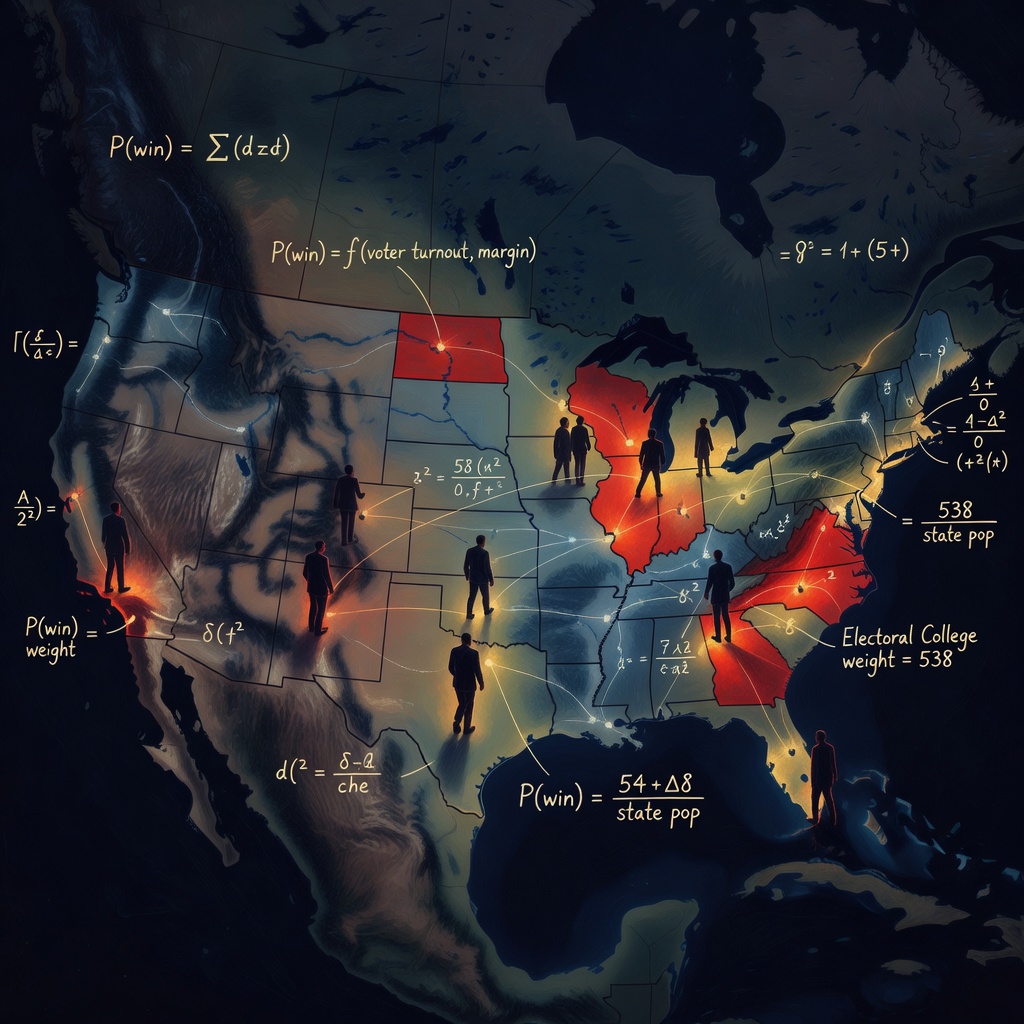 Why candidates ignore safe states and chase swing states — the math
 Trump's budget pick admits admin may bypass Congress to cancel spending without approval
 Trump negotiated Iran deal without Congress input — lawmakers now demanding a vote