Onpode
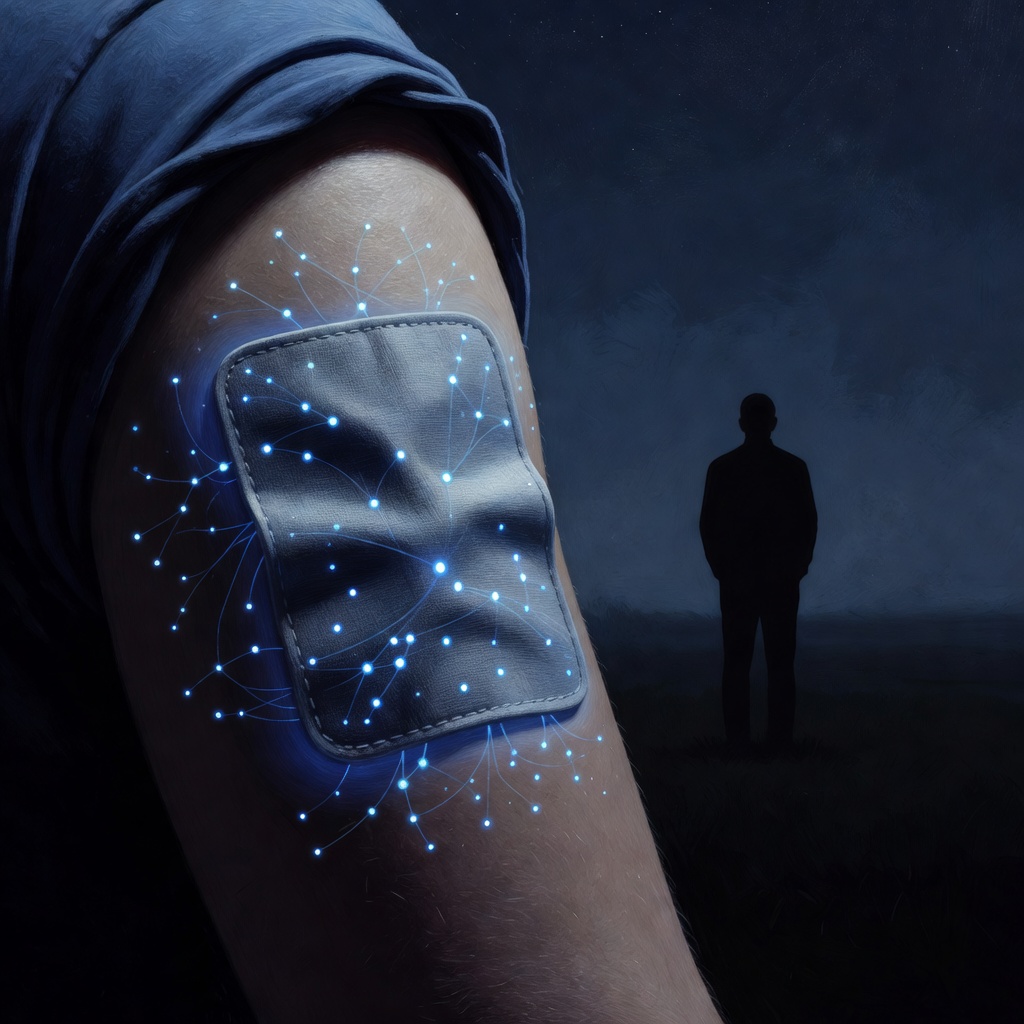
Cover art for University of Chicago's stretchable AI patch processes health data without cloud latency or privacy risk

University of Chicago's stretchable AI patch processes health data without cloud latency or privacy risk

June 30, 2026 · 6 min

Michael C. Vincent & Hope Sterling

The University of Chicago's stretchable AI skin patch, published in Nature Electronics on May 20, 2026, detects life-threatening arrhythmias like ventricular fibrillation in milliseconds using on-device neuromorphic inference — no cloud, no wireless transmission. A critical open question: the paper specifies no power source or battery life, making the 'always-on' claim unverified.

Researchers at the University of Chicago Pritzker School of Molecular Engineering, in collaboration with scientists at Argonne National Laboratory, have developed a stretchable, skin-like computing patch capable of running AI inference locally on the body in milliseconds.

0:006:18
Make your own on Onpode

Describe any topic. Hear it in minutes.

About this episode

A team at the University of Chicago's Pritzker School of Molecular Engineering, working with Argonne National Laboratory, published something in Nature Electronics that's easy to underestimate: a flexible skin patch that runs AI inference directly on the body. No cloud connection, no wireless transmission, no latency. In testing, it detected life-threatening heart arrhythmias with 99.6% accuracy in milliseconds — a speed that matters acutely when the condition in question is ventricular fibrillation, where every passing second narrows the window for intervention. The hardware itself is quietly radical. These aren't miniaturized silicon chips — they're organic electrochemical transistors, conducting polymers that flex with your skin and interface with biological tissue. The neuromorphic design, modeled on how the brain processes information rather than how a phone chip does, is what makes the whole thing efficient enough to live on an arm. But the episode doesn't just celebrate the result. It sits with the real open questions: the paper never specifies how the device is powered or for how long, which makes the 'always-on' framing feel unearned. And the privacy feature — no data ever leaves the body — creates a genuine regulatory puzzle. A system with no cloud log gives auditors and liability frameworks nothing to verify. The episode explores what it actually takes to move from a Nature Electronics publication to something a hospital trusts, and why that gap is larger and stranger than the transistor science.

Frequently asked

How does the University of Chicago AI skin patch detect heart arrhythmias?

The University of Chicago patch detects arrhythmias including ventricular fibrillation in milliseconds by running AI inference directly on the skin using organic electrochemical transistors and a neuromorphic design. No data is sent to a cloud server, eliminating round-trip latency that researchers describe as potentially life-threatening during cardiac emergencies.

What makes the University of Chicago AI patch different from a smartwatch ECG?

Unlike smartwatches that transmit health data to external servers for processing, the University of Chicago patch performs AI inference on the device itself — embedded in a flexible substrate that bends with skin. Researcher Sihong Wang calls it 'a personal, instantaneous doctor integrated into the body,' with no wireless transmission and no privacy exposure.

How long does the University of Chicago AI skin patch battery last?

The University of Chicago patch's power source and battery life are not specified in the Nature Electronics paper published May 20, 2026. This is a significant open question: a device marketed as 'always-on' with no stated power specification cannot guarantee continuous monitoring, which is central to its medical value proposition.

Is the University of Chicago AI skin patch FDA approved or available for clinical use?

The University of Chicago AI skin patch is not FDA approved and has no stated regulatory pathway as of its May 2026 Nature Electronics publication. Because the device runs AI inference locally with no cloud log, reviewers cannot audit whether its model has drifted — a liability question the research does not address.

Who developed the AI skin patch and what institutions are involved?

The AI skin patch was developed by Sihong Wang, assistant professor at the University of Chicago Pritzker School of Molecular Engineering, in collaboration with Argonne National Laboratory. The Nature Electronics paper was published May 20, 2026. Argonne's involvement — a government-scale manufacturing institution — signals the printing process may be scalable beyond a university lab.

Grounded in 9 sources
A stretchable, adhesive, and wearable hydrogel-based patches based on a bilayer PVA composite for online monitoring of sweat by artificial intelligence-assisted smartphones. · doi.org
Fully integrated AI-enhanced flexible wearable sensor for real-time movement evaluation and table tennis training. · doi.org
Research And Application of Wearable Sensor Systems Based on Daily Physical Indicator Collection and Analysis in Elderly Health Assurance · doi.org
Flexible and wearable energy storage devices: Nanomaterials, device architectures, and bio-integrated applications · doi.org
Flexible electronics for forest and veterinary health monitoring · doi.org
Nano-Micro Letters Intelligent E-Skin with Onboard ML · link.springer.com
Meta Fury AI Glasses Review: The Worst Company Still Makes the Best Smart Glasses - Gizmodo · gizmodo.com
Meta Launches $299 Smart Glasses — Wearable AI Goes Mass-Market · businesstech.news
AI Inference at the Edge: Unlocking Real-Time Device Intelligence · ceva-ip.com
Read transcript

Hope Sterling: Michael, good — you're here, because I genuinely needed someone to process this with me and I've been like, pacing.

Michael C. Vincent: Pacing is usually a good sign. What are we processing?

Hope Sterling: Okay, Sihong Wang — assistant professor, University of Chicago Pritzker School of Molecular Engineering — his team just published in Nature Electronics, May 20, 2026, with Argonne National Laboratory, a patch that does AI inference directly on your skin, no cloud, no wireless, milliseconds. Like the paper literally dropped.

Michael C. Vincent: It's five minutes old in research time. And people are treating it like a concept.

Hope Sterling: Right?! And the stakes — okay tell me the stakes because I keep reading 'ventricular fibrillation' and I need you to make it land.

Michael C. Vincent: Your heart stops coordinating. Every second of cloud lag — and the sources call it, plainly, too long — is a second that window is closing. Li et al. built something that catches it before the signal even reaches your brain. That's what 'milliseconds' means here.

Michael C. Vincent: Now here's the click. Most wearables are basically phones strapped to your wrist — they send your data somewhere else, something thinks about it, the answer comes back. This patch is the opposite. Imagine a tattoo, but it does the math. The thinking is in the material itself, printed right onto you.

Hope Sterling: Wait — printed. Like, actually printed onto skin?

Michael C. Vincent: Onto a flexible substrate that moves with your skin, yes. And this is where the materials science gets quietly radical — organic electrochemical transistors, conducting polymers, not silicon. No conventional chip. The transistors bend when you bend. They interface with biological tissue. That's not miniaturization, that's a different category of object entirely.

Hope Sterling: Okay that gave me chills — but wait, I keep thinking, a university lab makes a bendy transistor and then what? Like, how does this leave the building? And that's actually my thing — Argonne National Laboratory is in this collaboration, and that detail kind of floored me because that's not a lab curiosity anymore, that's government-scale manufacturing infrastructure saying yes to this printing process.

Michael C. Vincent: That's the signal, yes.

Hope Sterling: Like Argonne doesn't just show up for fun, right? They're there because — I mean, someone decided this could scale, and that's the moment it stops being a proof of concept and I'm— yeah, that's the part that made it feel real to me.

Michael C. Vincent: And Sihong Wang's phrase — 'a personal, instantaneous doctor integrated into the body' — he's not describing a gadget. He's describing the inference happening on your arm, no server farm, no round-trip, no privacy exposure. The neuromorphic design — mimicking how the brain stores and processes, not how a phone chip does — that's what makes it efficient enough to live on skin in the first place.

Hope Sterling: But okay — everyone keeps calling this 'always-on AI health monitoring' and that phrase is just getting passed around like it's settled, and I'm like, wait, always-on *how*? Because the paper never — like, Li et al. never actually says what powers this thing or for how long. That detail is just... not there.

Michael C. Vincent: Is that a fatal flaw, or is that just an early-stage paper gap?

Hope Sterling: For *this* device? That's the whole story. Like — Tuesday, 6:47 AM, patch detects something wrong at dawn. But if it died overnight the way an Apple Watch dies, that detection never happens. 'Always-on' without a power spec isn't a feature, it's just a claim.

Michael C. Vincent: No, I don't buy that it's just marketing — but you're right that the gap is conspicuous.

Hope Sterling: And then — okay this is my surprise — Meta and EssilorLuxottica just launched the Meta Glasses, June 25th, $299, and there's literally a Kylie Jenner collaboration frame. That's wearable AI as a *consumer product* — priced, branded, celebrity-endorsed. The UChicago patch has none of that. No price, no power spec, no regulatory pathway named anywhere.

Michael C. Vincent: Mm. And that contrast actually sharpens something. Meta's product is $80 cheaper than their own Ray-Ban models — Zuckerberg is pricing it to own a category. The patch isn't competing in that lane. But the question it raises is real: is this a consumer device or a regulated medical one? Because those are completely different problems.

Hope Sterling: Right, and — wait, that's actually it — the real gap isn't the milliseconds. It's continuity. Can it stay on long enough to matter? That's the thing nobody's saying out loud.

Michael C. Vincent: And the first real fight — when this actually moves toward clinics — it won't be about the transistors. It'll be about who gets to decide when a device on your skin has learned something wrong. A system that never phones home leaves no audit trail. No cloud log, nothing a regulator can pull. How does anyone verify it hasn't drifted?

Hope Sterling: Which is like — that's the thing stuck with me. A silent local AI, right, no wireless, nothing leaves the body — which we loved, that was the privacy win — but now you're asking a hospital, an FDA reviewer, someone, to just... trust it? Trust that it learned correctly and stayed correct? I don't — I genuinely don't know how that gets resolved.

Michael C. Vincent: I don't either. And Wang's vision — aging populations, chronic disease, the pressure on healthcare infrastructure — that's real and urgent. But the gap between a Nature Electronics publication and a clinically approved device involves liability questions the research simply doesn't engage.

Hope Sterling: Yeah. That's the one nobody's answered yet.
University of Chicago's stretchable AI patch processes health data without cloud latency or privacy risk · Onpode