Brian Reed: Hi. So — can I just say, a week ago Greenland felt like background noise and now it very much does not.
Eliza Ward: She landed Sunday. Nuuk. That's what changed.
Brian Reed: Von der Leyen. Yeah. September sixth. And the visit runs through Monday — so the announcement is today, essentially.
Eliza Ward: Nielsen's in the meeting. Frederiksen too — Danish PM flew to Nuuk for this.
Brian Reed: The part that I find genuinely hard to get my head around — the reason this is even happening is that Trump's administration started pushing to acquire Greenland in 2025. Military threats, tariffs, actual pressure. And von der Leyen, in January 2026, said fine, 'massive' EU investment as a counter.
Eliza Ward: And this is that counter, in person.
Brian Reed: Critical minerals, satellite comms, renewable energy — that's what she's expected to announce. 'Substantial' is the word she's used. No confirmed number as of the Sunday arrival.
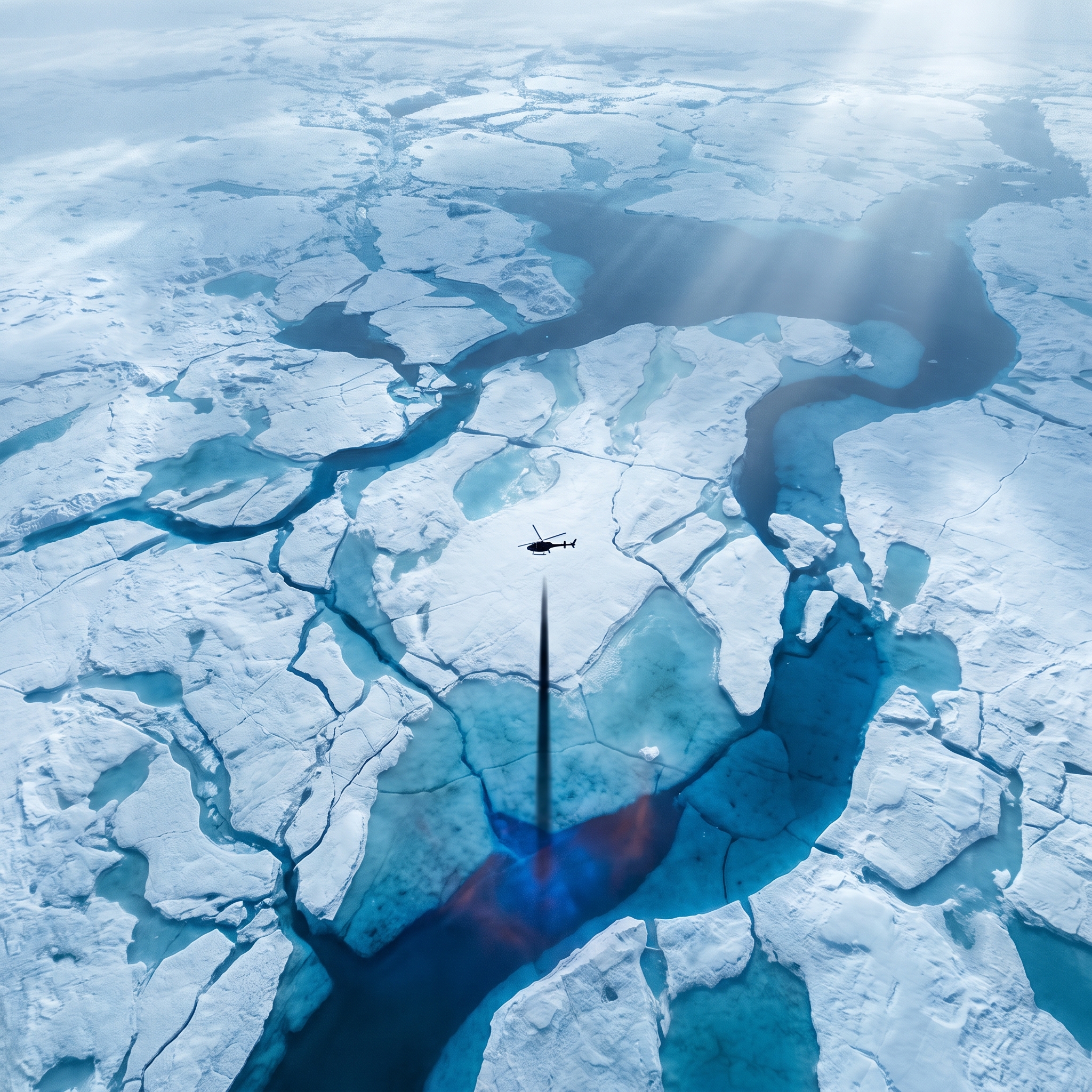
Eliza Ward: Wait — and she's also touring the ice sheet as part of this. Which is either meaningful climate signaling or very good optics, and I'm not sure yet which.
Brian Reed: The ice sheet tour is the thing I'd set aside for a second, because — the number question is actually stranger than it looks. Von der Leyen says 'substantial.' Euractiv has €530 million over seven years starting 2028, plus another package exceeding €150 million. But those are Commission proposals. She hasn't confirmed them herself.
Eliza Ward: Right — and that gap is the whole story. It's like a restaurant saying the tasting menu will be spectacular and refusing to tell you what's on it. You know something's coming. You don't know what you ordered.
Brian Reed: And Sermitsiaq — a Greenlandic newspaper — broke the partnership declaration story before the Commission did. The EU's own press operation wasn't first.
Eliza Ward: Hold on — that's actually telling. If Nuuk's local paper has the story before Brussels announces it, either Greenland leaked it or someone in the Commission was briefing around the official channel. Neither of those is an accident.
Brian Reed: The Síkela visit fits that read. He's in Nuuk August 31st — so six days before her arrival — and the package is still, apparently, being shaped at that point.
Eliza Ward: Which means — wait, actually that cuts two ways. Either Síkela's visit was finalizing details and they just ran out of time to lock the numbers, or the sequencing was deliberate — land the atmosphere first, commit to specifics later when there's less room to say no.
Brian Reed: 56,000 people. Even the unconfirmed €530 million, that's roughly €12,000 per person per year over seven years. For a territory where everything is imported. That could be transformative. Or it could be a commitment that resets in 2035 and leaves Greenland more dependent than before.
Eliza Ward: Exactly — 'substantial' and real are two different things right now. One is confirmed. One is Euractiv.
Brian Reed: So what changes if the Monday announcement actually names the €530 million figure versus if she stays vague again?
Eliza Ward: If she names the number, it matters less than people think — because the take that's already circulating is wrong. The one that says this is the EU rushing in to rescue Greenland. It's not. It can't be. Greenland walked out of the European Economic Community in 1985. Deliberately. They held a referendum, they voted to leave, and they got Overseas Country and Territory status — which is specifically a category that keeps you outside the institutional structure.
Brian Reed: Forty years of institutional distance. On purpose.
Eliza Ward: And the partnership declaration being signed today — it's not membership, it's not association, it's a political commitment layered onto a relationship the EU has never actually resolved. There's no binding architecture underneath it.
Brian Reed: Which means — hang on — if the political winds in Brussels shift, what holds this together? Like, what's the enforcement mechanism on €530 million in good intentions?
Eliza Ward: Nothing binding. That's the answer. And the November 2023 MOU on raw materials — which does exist, signed, full chain from exploration to processing — that's the closest thing to a durable foundation here. But even that complicates the rescue narrative, because if Síkela signed an MOU in 2023, this isn't week one. The EU's been at this for two years. It's not panicked improvisation.
Brian Reed: Right — but the part that doesn't fit is what's happening the same week, same city, nothing to do with the EU. Frederiksen, Nielsen, Beinir Johannesen — the Faroese PM — all in Nuuk for the rigsmøde. That's the semi-annual Kingdom of Denmark meeting. Greenland's constitutional gravity is still pulling toward Copenhagen, not Brussels.
Eliza Ward: Wait — that's actually the sharpest thing about this week. Von der Leyen's visit and the rigsmøde are simultaneous, and nobody in the official statements is acknowledging the tension in that. Múte Egede is in Contact Committee meetings. Sara Olsvig, the Inuit Circumpolar Council chair, is in the room. These are not passive recipients.
Brian Reed: No, I don't buy the rescue framing either. 56,000 people, 25 of 34 critical raw materials the EU flagged as essential — Greenland has real leverage here. And that's actually where this gets more complicated, not less.
Eliza Ward: Which — yeah, and the piece we haven't touched yet is what that leverage actually means when there's still an unresolved US working group running in parallel. The structural power dynamic flips in a way the 'EU rescues Greenland' story completely misses.
Brian Reed: That flip — EU needs Greenland more than Greenland needs the EU — that's the part Marc Jacobsen at the Royal Danish Defense College keeps flagging. And the number that makes it concrete: 25 of the 34 critical raw materials the Commission listed as essential for green and digital industries. Twenty-five. In one territory that isn't even an EU member.
Eliza Ward: That's nearly three-quarters of Europe's critical mineral dependency sitting in a place that voted to leave their institutions forty years ago.
Brian Reed: And the reducing-China-dependence angle — that's not rhetorical. That's the actual driver. The EU's green and digital transition has a China problem on materials, and Greenland is the most plausible non-Chinese answer they have.
Eliza Ward: Which — wait, that actually reframes what a Greenlandic mining engineer does Monday morning reading this announcement. The EU is offering a package starting 2028. But the US-Denmark-Greenland working group from January 2026 — Rasmussen said he expected resolution before year-end. That's still open. So she's got two sets of political futures and permits she recommends right now are real decisions.
Brian Reed: And Trump walked back some positions at Davos — but he hasn't dropped the annexation claim. So she's not choosing between a stable EU offer and nothing. She's choosing between a 2028 EU commitment with no binding enforcement and a US process that could produce a completely different answer before that funding even begins.
Eliza Ward: That working group is the specific thing to watch. Not the declaration text, not the ice sheet tour — the working group outcome.
Brian Reed: Because if that group produces something — even a framework — before the €530 million starts flowing in 2028, does the EU package become the fallback or does it become irrelevant?
Eliza Ward: Either foundational or irrelevant — yeah. And we genuinely don't know which. That's not a hedge, that's actually the state of it.
Brian Reed: The signal I'd watch — does Nielsen say anything after Monday's meeting that references the working group timeline? Because if Greenland's premier starts aligning the EU announcement with the US negotiation track, that tells you they're playing both at once. Which is honestly the only rational move for 56,000 people sitting on 25 critical materials the whole world wants.
Eliza Ward: And that's the thing about the ice sheet tour, actually — Von der Leyen standing on the ice Monday. That image is doing real work. It's the Commission's executive body saying *we are present here*, not just in policy documents. But presence isn't — I mean, presence doesn't make the 2028 funding start date move.
Brian Reed: It's symbolism with a gap in the middle. The symbol is real. The clock on what fills it — that's the Rasmussen working group. Which still hasn't resolved. He said before year-end, and it hasn't.
Eliza Ward: That's the actual open thread here. Not whether Nielsen smiled at the signing. Whether that working group produces anything before 2028, because if it does — Greenland's optimal move was never choosing. It was keeping both offers live long enough that the competition did the work.
Brian Reed: Which — yeah, and we can't answer that today. Nobody can. The working group timeline is unresolved. The €530 million is unconfirmed. The one thing that's confirmed is she's on the ice Monday morning and Nielsen is across the table. Everything else is still moving.
Eliza Ward: Watch the Nielsen statement after Monday's meeting. That's the read.