Dr. Nathan Hayes: Sarah, good to be back — I want to ask you something before we start. If the medication keeping your nervous system stable stopped working during a pandemic, and your appointments disappeared, what would you do?
Sarah Lin: Oh, that's... I mean, that's not a comfortable question to sit with, um — I don't know. I think I'd be scared enough to try almost anything.
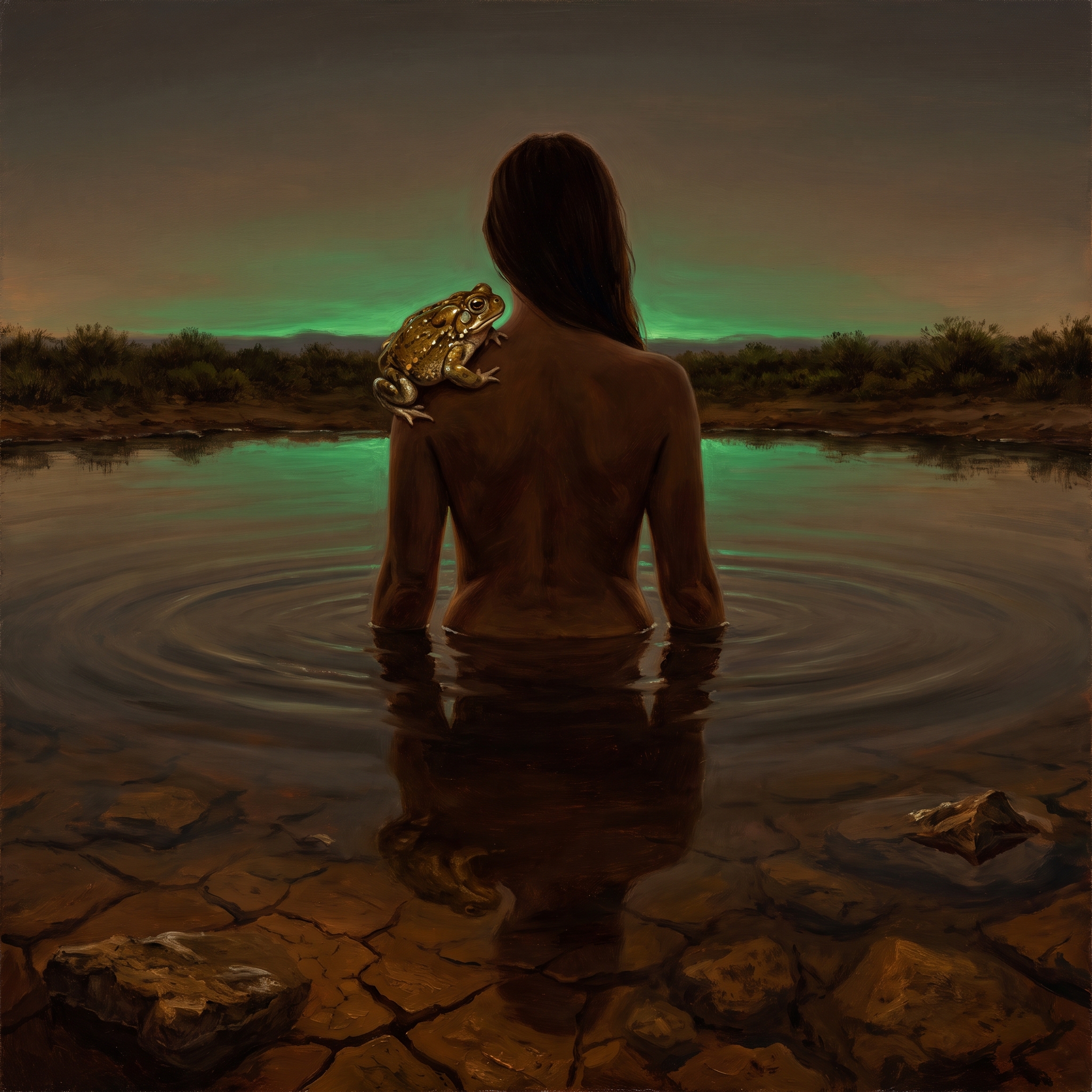
Dr. Nathan Hayes: That's exactly where we're starting today. There's a woman named Sly Young — her profile ran in USA Today on August 30th, 2026 — Black woman, neurodivergent, chronic PTSD. During COVID, her treatment became less effective. And what she tried instead was toad venom. Specifically 5-MeO-DMT, a psychoactive compound, which she frames as part of what she calls 'sacred earth medicine.'
Sarah Lin: Wait — she uses that phrase specifically? Sacred earth medicine?
Dr. Nathan Hayes: Her words, yes. And importantly — she also describes herself as not always believing in 'woo-woo' medicine. So she's not a convert. She's something more complicated than that.
Sarah Lin: Sort of like... engaging with something you're not sure you trust because the thing you did trust is gone. That's a different kind of desperation than just — seeking out alternatives.
Dr. Nathan Hayes: Exactly — and the question underneath her whole story is whether that move is a failure of the system, a rational recalibration of risk, or both at once.
Sarah Lin: Mm, and whether we can even tell the difference from the outside.
Dr. Nathan Hayes: But — and this is what I keep wanting people to understand — the system wasn't just failing her during COVID. It was already cracked before a single lockdown happened. She experienced discrimination from providers. Dismissiveness about her symptoms. As a Black woman navigating the American healthcare system, that's not a one-off bad appointment. That's documented, structural pattern.
Sarah Lin: Oh — so this wasn't one bad appointment.
Dr. Nathan Hayes: Not even close. And then layer on top of that — she grew up in a cult. Experienced abuse. Now in adulthood, trusting authority figures is... I mean, that's not a preference. That's a survival response. And doctors are authority figures.
Sarah Lin: Right — but the part that doesn't fit cleanly is, she still tried conventional medicine at all. Given all of that.
Dr. Nathan Hayes: Right — which tells you how serious the PTSD was. She needed it to work. And then there's a third thing: her family's substance abuse history made her genuinely afraid of pharmaceutical dependency. So a standard psychiatric tool — medication — was already foreclosed for her, or at least deeply fraught. Three separate walls before the pandemic added a fourth.
Sarah Lin: Mm. Discrimination, the cult upbringing, the pharmaceutical fear — those aren't grievances. They're... architectural. They're built into how she could even approach care.
Dr. Nathan Hayes: Exactly — and now, mechanistically, what happens when in-person exposure-based therapy stops? Trauma treatment works through extinction learning. The brain re-encodes a threat memory as safe through repeated, controlled contact. That process requires continuity. When the sessions stop, the extinction pathway doesn't pause — it can start to reverse. She wasn't just inconvenienced. Her nervous system may have been actively losing ground.
Sarah Lin: Wait — actively reverting? Not just... plateauing?
Dr. Nathan Hayes: The brain reverts toward threat vigilance, yes. So by the time she's looking at toad venom — at 5-MeO-DMT — she's not making an ideological choice about medicine. She's destabilizing. And every conventional pathway has something in it that's already burned.
Sarah Lin: And that's — um, that's the thing that keeps pulling at me. Because she didn't discover toad venom randomly. She inherited a whole orientation toward healing that already had somewhere to go when the walls closed in.
Dr. Nathan Hayes: Say more about that — the inheritance piece.
Sarah Lin: Young comes from a long lineage of traditional healers. Multiple generations. So her grandmother's healer — or whoever carried that knowledge — had more track record inside that family than a physician at a clinic who was dismissive of her symptoms ever did. That's what medical pluralism actually looks like from the inside. It's not fringe. It's... her grandmother was right to be skeptical, and Sly inherited that pattern recognition as something closer to wisdom than superstition.
Dr. Nathan Hayes: Now — the honest question I have to ask: is that inherited distrust a barrier to evidence-based care, or is it rational adaptation from a community that had real documented reasons not to trust the system?
Sarah Lin: Both. I think it's actually both simultaneously, and I don't think we get to resolve that cleanly. The multi-generational distrust of Western medicine in Black communities isn't — wait, actually, I want to be careful here — it's not a belief system that formed in a vacuum. It formed from real harm. So CAM, Complementary and Alternative Medicine, holding that alongside conventional Western medicine, that's not confusion. That's a survival strategy that got passed down because it kept working.
Dr. Nathan Hayes: Agreed — and I'd add: rational adaptation and complicating factor aren't mutually exclusive. You can honor the lineage and still ask whether toad venom specifically carries the right risk profile for this particular person.
Sarah Lin: Mm. Right — the inherited framework opens the door. It doesn't tell you what's on the other side of it.
Dr. Nathan Hayes: Exactly. And what Young calls sacred earth medicine — that framing matters, because it's not just 'alternative.' It's spiritually and ecologically grounded, in her language. That carries moral authority inside the lineage in a way a clinical trial simply doesn't.
Sarah Lin: Which brings us to the part I find almost paradoxical — she describes herself as skeptical of woo-woo medicine, and she still went. What that actually reveals about the 5-MeO-DMT research, and what it means to participate in something you don't fully believe in — it's complicated in a way I don't think we've touched yet.
Dr. Nathan Hayes: And skeptical participation — that's actually the phrase I want to hold onto, because it's doing more diagnostic work than it looks like. The fact that she went in without full belief isn't a weakness in the story. It's the clearest signal we have of how far the system had already failed her. You don't try something you're not sure works unless everything you were sure about already hasn't.
Sarah Lin: Oh — that's a different way to read it than I expected.
Dr. Nathan Hayes: Now here's what the research actually shows — because this is where I want to be careful. Early case studies on vaporized 5-MeO-DMT, from the Bufo alvarius toad specifically, reported clinically significant reductions in PTSD symptoms. Some of those effects sustained over twelve months. That's not nothing. But — controlled trials are limited. Safety complications are documented. Those are two genuinely different facts and they both have to stay in the room.
Sarah Lin: Twelve months — that's... I mean, that's not a placebo afternoon.
Dr. Nathan Hayes: No. But here's where I think people slip — her reported experience of benefit is real on its own terms. I'm not questioning that. What it doesn't do is constitute clinical proof. Those are actually separate questions, and conflating them is the trap in almost every story like this one.
Sarah Lin: Mm. So — her healing counts, and it doesn't prove the mechanism. Both things are true at once.
Dr. Nathan Hayes: Exactly. And the clinical risk in skeptical participation is real — not philosophical. Someone genuinely destabilizing, with a family substance-abuse history that already makes her cautious about dependency, trying an unvalidated compound with an incomplete safety profile... believing just enough to try it is actually the most vulnerable position. Not the safest.
Sarah Lin: So the very thing that feels like agency — the skeptical part of the participation — um, it might be what removes the protection that full belief in a practitioner-led process would give you.
Dr. Nathan Hayes: That's — yeah. That's the uncomfortable center of it. The science on 5-MeO-DMT deserves a genuine trial. It simply doesn't have one yet. And Sly Young walked into that gap not because she wanted to, but because the gap was the only door left open.
Sarah Lin: What stays with me — um, and I keep trying to find a simpler way to hold it — is that she walked in skeptical and she still went. That's not a story about toad venom. That's a story about what the system would have had to look like for her to stay.
Dr. Nathan Hayes: That's the diagnostic, yes. Not whether 5-MeO-DMT worked. What would have to change so Sly Young — with her cult upbringing, the provider discrimination, the pharmaceutical fears, that whole inherited lineage of reasons not to trust — never had to find out.
Sarah Lin: And we don't get to answer that cleanly today.
Dr. Nathan Hayes: No. We don't.
Sarah Lin: I'm glad we didn't try to.