Jordan Hale: Alex, hey — I've been staring at a utility filing from Wisconsin for the last hour and I think I need to just describe what I'm looking at, because it's one of those things that seems boring until you realize what it actually is.
Alex Mercer: Utility filings are never boring. What'd you find?
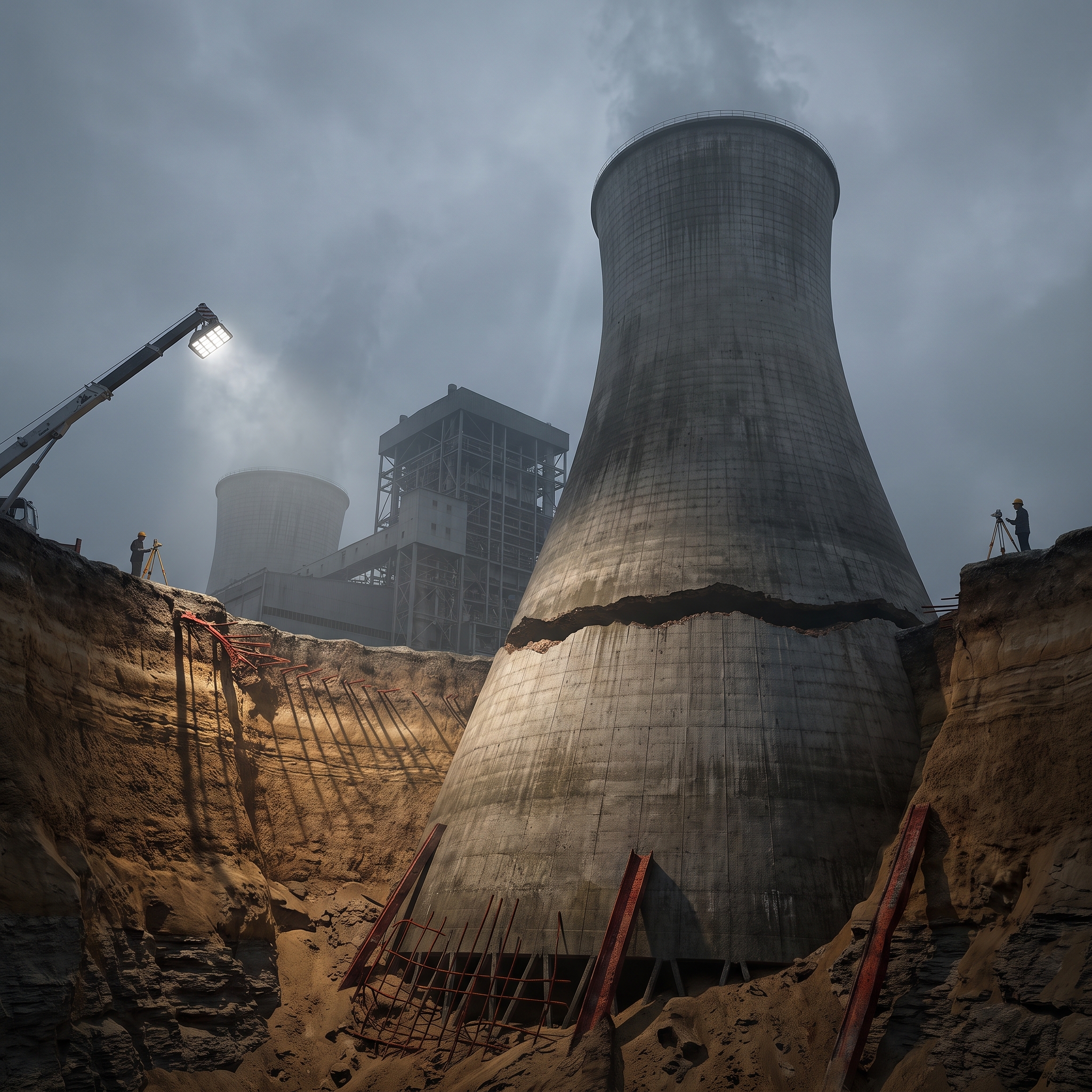
Jordan Hale: Wisconsin Electric Power Company — WEPCO — is retiring the Oak Creek Power Plant. It's a 640 megawatt coal plant. They're doing it seventeen years ahead of schedule. And on the books right now there is $645 million in undepreciated value for that plant. So the asset is going away. The debt on it is not.
Alex Mercer: That gap between book value and economic value — that's the stranded asset. Textbook case.
Jordan Hale: Wait, but here's what I want — I mean, let's not skip past what that means for actual people. Ratepayers in Wisconsin are going to keep seeing charges for Oak Creek on their bills after Oak Creek is physically gone. That's the story, right? The plant closes, the payment doesn't.
Alex Mercer: That's one version of how it resolves — charges get passed through to consumers via the rate base. The other options are a write-off on shareholders or some form of public compensation. State utility commissions decide which lever gets pulled.
Jordan Hale: No way are shareholders just volunteering for a $645 million write-off.
Alex Mercer: Basically never. Which is why I think we need to zoom out for one second — because Oak Creek is one plant. Undepreciated investments at regulated coal plants across the entire United States exceed a hundred billion dollars right now. WEPCO is the visible edge of something much larger.
Jordan Hale: A hundred billion — okay, that reframes it completely. This isn't a weird Wisconsin edge case, this is a structural problem that every state utility commission in coal country is about to be handed.
Alex Mercer: Right — and the policy design for handling it, honestly, is mostly nonexistent. That's the question underneath all of this.
Jordan Hale: Which is what we're trying to figure out today — you know, if you've got a hundred billion dollars of stranded coal assets in the U.S. alone, and plants are retiring early, what does a fair way through actually look like? Who absorbs it, and does anyone even decide that deliberately or does it just happen?
Alex Mercer: That's the episode. And Oak Creek is where it gets concrete.
Jordan Hale: But here's what I keep getting stuck on — like, why is this different from any other company that makes a bad investment? Businesses write things off all the time. Why does this become a political crisis?
Alex Mercer: That's exactly the thing most coverage misses. Think of it like taking out a 40-year mortgage on a house and then being forced to sell it in year 23. You still owe the bank. The question is whether the buyer pays off your remaining mortgage, or you eat the loss.
Jordan Hale: Okay that landed. That actually landed.
Alex Mercer: The difference with utilities is that a normal company takes that loss and moves on. But utilities don't operate like normal companies. There's a regulatory compact — and this is the mechanism — where the state utility commission, in advance, sets a depreciation schedule and says: you will recover your construction costs through customer rates over the life of this plant. That's not an assumption. That's a promise baked into the regulatory framework.
Jordan Hale: So when Oak Creek gets retired seventeen years early — the commission made that promise, and now someone has to break it.
Alex Mercer: Right — and the $645 million undepreciated on WEPCO's books isn't some accounting fiction. Those are real dollars the commission said ratepayers would fund over the remaining life of the plant. Early retirement doesn't make that number disappear. It just forces a decision about who absorbs it.
Jordan Hale: Which is — wait, that's actually a totally different conversation than 'plant closes early.' That's a breach of a regulatory contract.
Alex Mercer: Exactly. And coal plants were built — construction costs exceed thirty-five hundred dollars per kilowatt — specifically under the assumption that the depreciation schedule would hold. The design life is forty to sixty-plus years. The financial model and the physical plant are synchronized on purpose. That synchronization is what the regulatory compact is protecting.
Jordan Hale: No way did anyone building Oak Creek in, you know, the eighties or whenever, think 'this plant might become uneconomical in year twenty-three.' I mean — the whole model assumes you run it to the end.
Alex Mercer: Historically, coal plants globally retire at an average of forty-six to fifty years. So the financial model isn't reckless — it's calibrated to actual physical behavior. What's changed is the economic life getting severed from the design life by cheaper alternatives and policy shifts. That's the gap. And state utility commissions are the bodies that now have to decide: does that gap land on shareholders or ratepayers?
Jordan Hale: And most coverage just says 'coal plant closes' — like it's a climate win — without ever explaining that somebody is still paying that mortgage.
Alex Mercer: To some extent, yeah. The headline is about the closure. The actual story is about the amortization schedule that doesn't close with it.
Jordan Hale: That's the thing nobody explains. The plant is gone. The bill is not.
Alex Mercer: And here's where I think the public conversation actually gets it wrong — because most of the coverage frames utility resistance to coal closures as either inertia or climate denial. That's not what's happening. Every additional year Oak Creek operates, WEPCO recovers more of that $645 million through customer rates. That's not ideology. That's a capital recovery calculation.
Jordan Hale: No, that's — yeah, that's exactly it. The lobbying isn't about coal being good. It's about depreciation schedules.
Alex Mercer: Right — and early closure destroys that recovery. State utility commissions may force shareholders to absorb what's left. So when a utility lobbies to delay retirement, they're not being irrational or sentimental about fossil fuels. They're protecting a specific number on a balance sheet.
Jordan Hale: Okay but — and I want to push on the other side of this — because there's a second wrong take, and it's the one that actually bothers me more. The framing that ratepayer recovery is somehow just neutral accounting. Like it's the fair, boring, procedurally correct outcome.
Alex Mercer: I mean, utilities do have a legal promise from the commission. That's not nothing.
Jordan Hale: They do, but — okay, think about a retiree in Racine, Wisconsin. She opens her electric bill and there's a surcharge for Oak Creek. The plant is already offline. She had zero voice in that investment decision. She didn't sign off on the depreciation schedule. And she's now funding the gap between what WEPCO bet on and what actually happened. That is a socialization of a private financial loss.
Alex Mercer: I think that's fair — though I'd add the counterpoint that WEPCO collected returns on Oak Creek during the profitable years. The stranded cost debate isn't just about who absorbs the loss now. It's whether an entity that already profited from an asset should be further compensated when that same asset loses value.
Jordan Hale: Right — that's the part that gets swallowed. You made money on it when it worked. Why does the downside land entirely on ratepayers who never shared the upside?
Alex Mercer: And multiply that question by a number that I think genuinely reframes the scale here — global net present value of stranded coal assets through 2050 is estimated between $1.3 and $2.3 trillion. That's the full distribution fight, globally. WEPCO is one node.
Jordan Hale: Wait — $1.3 to $2.3 trillion. That's not a rounding error between those two numbers.
Alex Mercer: The range reflects how fast you assume the transition happens. And China is where the acute version of this sits — they have the world's youngest large coal fleet, plants barely into their depreciation schedules. If they align with net-zero targets, the write-off math is brutal.
Jordan Hale: And we haven't even touched the layer underneath all of this — you know, communities that don't show up anywhere in the utility accounting. The GDP-per-capita numbers that look fine on paper while actual employment hollows out. That's the part we need to get into, plus whether Germany's competitive auction model is actually a template anyone can use.
Alex Mercer: That community layer is actually a separate accounting problem — not downstream of the utility fight, running parallel to it. The EU NUTS 2 dataset covers coal regions from 2000 to 2022 and it shows a persistent 1.1 percentage-point unemployment premium relative to non-coal neighbors. Not a spike. Persistent. Every year, for two decades.
Jordan Hale: Wait — every year? Like that gap doesn't close even when coal is still running?
Alex Mercer: That's the finding. And the GDP numbers can actually look fine — or even improve — in those same regions. Which sounds like good news until you understand the mechanism.
Jordan Hale: Okay, the hollowing-out effect. Because the people who leave are — wait, no, say this more carefully — it's not random emigration, right? The mobile workers leave. The people with options leave. So what's left behind is a smaller population, and GDP per capita can actually tick up because you're dividing by fewer people, but the employment picture and the tax base and the school district budget, all of that is getting worse.
Alex Mercer: Exactly. It's a statistical illusion. The region looks less poor on paper while actual community fiscal health deteriorates. Think about a county commissioner somewhere trying to fund road maintenance — the headline number says fine, the actual revenue does not.
Jordan Hale: And that's why South Korea's Chungnam region is such a pointed example — you know, it's a massive coal power concentration, and the argument there is that national support needs to arrive *before* the closures, not after, because by the time you're in the hollowing-out pattern, it's already too late to catch the mobile workers.
Alex Mercer: Proactive rather than remedial. Which almost no transition policy is, structurally.
Jordan Hale: Right — and that's the just transition principle in practice, or the failure of it. The idea is supposed to be that transition costs get distributed equitably with targeted support for workers and communities. But what actually happens is the utility accounting fight absorbs all the political oxygen, and the community adjustment question just... doesn't get answered.
Alex Mercer: Which is where Germany is genuinely interesting — and I think you had something on this.
Jordan Hale: Germany is the only country that ran a competitive coal phase-out auction. Like, the only one. Plant operators bid the minimum compensation they'd accept to close early. Competitive pressure. And the thing that flips my brain is — suddenly utilities have an *incentive* to retire first if the price is right. You've inverted the lobbying dynamic.
Alex Mercer: That inversion matters because of what bilateral negotiation actually is. When a government sits down one-on-one with a utility to agree on early closure compensation, the utility knows its real costs and the government doesn't. That's asymmetric information, and it's not a small gap — utilities can extract rents that a competitive process would eliminate.
Jordan Hale: So every country doing bilateral deals is basically negotiating blind.
Alex Mercer: To some extent, yes. The auction reveals the true floor. You're not guessing what the utility needs — they're telling you, under competitive pressure.
Jordan Hale: And yet — I mean, one country has done this. One. Why hasn't it spread?
Alex Mercer: I think basically it's a political economy problem. Designing an auction requires admitting you're going to compensate utilities for leaving, which is a hard message when your base wants coal gone for free. But here's what I'd watch — natural gas infrastructure. Plants built in 2005 at eight hundred dollars a kilowatt are already looking economically shaky against current renewable costs. The mechanisms we're arguing about now for coal define exactly who pays when that wave hits. And it will hit.
Jordan Hale: So coal isn't the destination — it's the first test case for a problem that doesn't end with coal.
Alex Mercer: And the Oak Creek case is still live. That's the thing. The Wisconsin utility commission hasn't resolved it. WEPCO filed, the $645 million is sitting there, and whoever sits on that commission right now is staring at a choice with no clean answer — charge ratepayers, force a shareholder write-off, or find some hybrid. None of those options are fair to everyone.
Jordan Hale: That's — yeah. And that's sort of the question I keep circling, you know, like — is there actually a version of this where the costs are visible, the burden is fair, and the transition accelerates? Or does the political economy of stranded assets always end up hiding the cost somewhere? Germany ran their auction, one country, and the mechanism works, but even there you still have someone writing a check. You've just made the price discovery honest. That doesn't tell you who pays.
Alex Mercer: I don't have an answer to that.
Jordan Hale: No. I mean — neither do I, and I've been staring at this for weeks. The two regulatory regimes just sit in collision. The old one promised utilities cost recovery. The new one demands fast decarbonization. And someone absorbs the gap. Every time. The only real question is whether we design that deliberately or just let it happen invisibly until it's too late.
Alex Mercer: Appreciate you dragging me through the Wisconsin utility filing. Worth it.