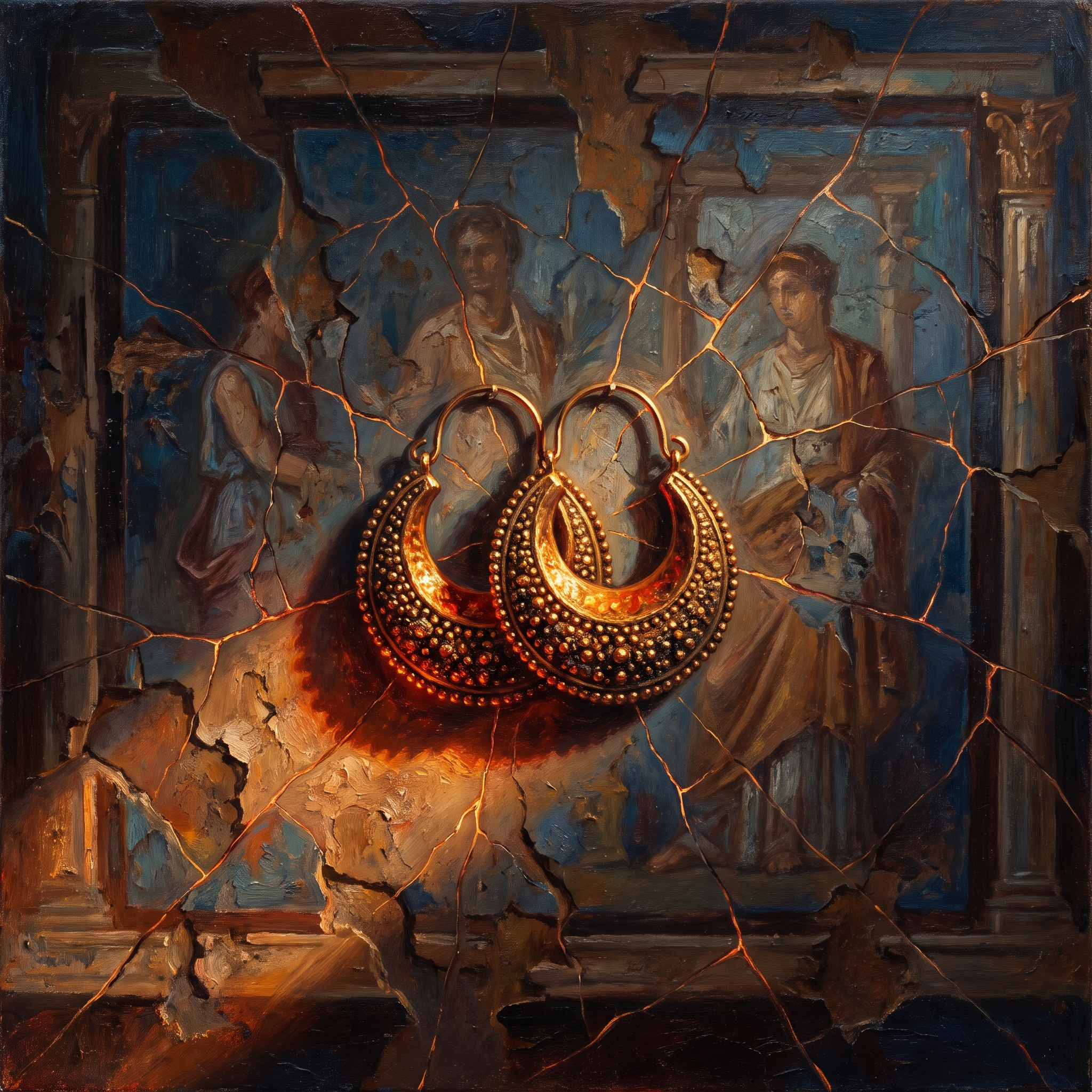
Hope Sterling: Juniper, real question — if someone hands you an earring and says it's three thousand years old, do you put it on?
Juniper Vale: I — no? I don't think I'd even touch it. Why are you asking me this?
Hope Sterling: Because Zendaya did. At a London photocall for Christopher Nolan's The Odyssey. Law Roach styled her — white Jacquemus dress, goddess energy all the way through, very on-brand for what he's been building across this whole press tour — and the earrings are these gold disc medallions that look incredible, very sculptural, very ancient-feeling.
Juniper Vale: And the ancient-feeling part is because—
Hope Sterling: —they're actually ancient! That's the whole thing. The medallions are from the Ziwiye hoard. Discovered in northwest Iran in the late 1940s, one of the most significant ancient collections — like, on that level — and these specific pieces are owned by Barron London, a Mayfair-based gallery, who lent them for the photocall.
Juniper Vale: Wait, so when you say lent — Barron London just sent over ancient Iranian artifacts for a film premiere photocall.
Hope Sterling: For The Odyssey press tour! Which — I mean, thematically it almost makes a horrible kind of sense, and that's part of what makes it so hard to look away. At the moment the photos dropped, it just looked like Law Roach being brilliant. Nobody was asking questions yet.
Juniper Vale: That gap — between what people saw and what was actually there — that's where this whole story lives, isn't it.
Hope Sterling: And the gap gets so much wider when you follow it back to who actually built the thing. Like — Glenn Spiro. He's the jeweler who did this. He took the medallions, mounted them in diamonds and 18-karat yellow gold, and called the whole project Materials of the Old World.
Juniper Vale: Okay, I need to stop you there — because that's the move I want people to actually picture. Imagine someone pulls a bronze ritual cup out of an ancient temple, mounts it in a cocktail ring, sells it in Mayfair. The cup is physically intact. Nobody scratched it. But you just turned a sacred object into an accessory. That's the problem — not the metal.
Hope Sterling: And Spiro has said — on record — that he collects "regardless of provenance." Those are his words. He describes himself as a voracious collector and he's just... openly not worried about where things come from.
Juniper Vale: Wait, he said that publicly?
Hope Sterling: Publicly! Which is — I mean, that's not a mistake, that's a stated philosophy. And then these specific medallions, they're not just old, they're 700 to 800 BCE, and they're from the Ziwiye hoard, which is considered one of the ancient world's most significant artifact collections. Not regionally significant. Globally.
Juniper Vale: That scale actually — I'll be honest with you — that shifts the whole frame for me. Because there's an Iranian-born art historian, Sussan Babai, she told The Guardian these objects likely had religious or ceremonial significance. And her word for what happened was "shocking."
Hope Sterling: Which, when a scholar of that background uses that word about her own cultural heritage — that's not hyperbole.
Juniper Vale: And Iran can't even formally demand them back — the hoard passed through so many international markets after the 1940s discovery that the legal chain is a mess. So there's no clean recourse.
Hope Sterling: So basically the journey through those markets is — that's not a side detail, that's the whole scandal. The earrings didn't appear in Mayfair by accident, they got laundered through respectability at every step.
Juniper Vale: And that laundering — that's exactly where Barron London's 'non-invasive claw setting' argument comes in, because it's the last step in that chain, and it's doing a lot of heavy lifting.
Hope Sterling: Okay because this is the part I'm obsessed with — they mounted the medallions using what they called a simple, non-invasive claw setting. Designed, they said, to preserve the original artifacts. And I — wait, like — preservation! They're framing it as conservation. That's insane.
Juniper Vale: Does the physical object being intact actually resolve anything about how it got there?
Hope Sterling: No! And that's exactly — okay, picture a graduate student at an auction preview, flipping through a Barron London catalog on her phone, and she stops because she recognizes a Ziwiye medallion from her dissertation research. The piece is pristine. No damage. Beautifully mounted. And the catalog says: non-invasive setting, preservation-forward. She literally cannot argue the object is harmed. But that — that's not the question. That's never been the question.
Juniper Vale: The question is how it left Iran.
Hope Sterling: Right — and Barron London told CNN they welcomed 'informed dialogue about provenance, preservation, and the appreciation of exceptional craftsmanship.' Which sounds open! It sounds collaborative! But when Glenn Spiro's own stated philosophy is that he collects regardless of provenance — like, those two things cannot coexist.
Juniper Vale: Welcoming dialogue while your jeweler has already said provenance is irrelevant to him — that's not accountability, that's a press release.
Hope Sterling: And Barron London positions itself as not even selling the pieces — they describe it as stewardship. Private ownership of potentially looted world heritage as, like, a public service. Archaeologists and art historians are pushing back hard on exactly this — physical preservation does not touch the foundational question. It's sophisticated marketing dressed as an ethical stance.
Juniper Vale: And honestly — there's a whole other layer to this about who the accountability actually lands on, and whether we're even calling this the right thing, that I think is going to reframe everything we've just said.
Hope Sterling: But wait — everyone online called this cultural appropriation. Like, that's the word that ran. And I get why it stuck, it's the frame people have, but — is that actually what this is?
Juniper Vale: It's not. And that distinction is the whole thing. Cultural appropriation is about a living community — their ongoing traditions getting co-opted without consent. The Ziwiye hoard is 2,700 years old. There's no single living cultural claimant. You can't appropriate a ceremonial practice that predates any current community by millennia.
Hope Sterling: Okay but — does the framing matter if people are genuinely upset either way?
Juniper Vale: Yes. Because the wrong frame lets Glenn Spiro walk. If this stays a debate about Zendaya's judgment — about whether she should have worn them — the antiquities market faces zero consequence. Spiro, Barron London, the whole supply side just... waits it out.
Hope Sterling: Oh that's — wait, that's actually kind of chilling.
Juniper Vale: What Sussan Babai was actually alarmed by — it wasn't mimicry of a living culture, it wasn't that anyone dressed like ancient Iranians. Her 'shocking' was about ceremonially significant objects from one of the ancient world's most significant collections being turned into earrings. That's an archaeological ethics violation. That's commodification of looted world heritage — stuff that belongs, under international norms, to humanity, not to a private collector in Mayfair.
Hope Sterling: And Law Roach — I mean, he picked them because they read goddess. Ancient, sculptural, perfect for The Odyssey press tour energy. There's no public evidence anyone briefed him or Zendaya on what they were actually holding.
Juniper Vale: Which is almost — I mean, that's the most clarifying detail of all of it. Picture Law Roach holding those earrings, seeing ancient gold discs, thinking: perfect, this is the look. And he's not wrong aesthetically. But nobody in that chain — not Barron London, not Spiro's team — stopped to say, these aren't costume jewelry, these are Ziwiye medallions with likely ceremonial origins and a completely murky legal history.
Hope Sterling: So Zendaya's the visible face, Glenn Spiro's the one who said provenance doesn't matter, and somehow we spent a week arguing about the wrong person.
Juniper Vale: And the earrings go back to Barron London after the photocall. That's what gets me — not for sale. They just sit in a Mayfair gallery until the next loan.
Hope Sterling: And Glenn Spiro moves on to whatever comes next in the Materials of the Old World series, Zendaya gets the headlines — the think pieces, the discourse — and the Ziwiye medallions just... wait. Three thousand years old and they wait for the next photocall. That's the whole thing, actually. That's it.
Juniper Vale: Yeah. The cameras never pointed at Barron London once.
Hope Sterling: Not once. I mean — if they had, maybe the conversation looks different. Maybe it doesn't. I honestly don't know.
Juniper Vale: Thank you for bringing me down this particular rabbit hole. I genuinely did not expect to end a Tuesday feeling this unsettled about a pair of earrings.