Person · 18 episodes
Jensen Huang
Jensen Huang is navigating a collision of infrastructure dominance, geopolitics, and public responsibility. Onpode's coverage spans his 2003 CUDA bet on programmability over efficiency — a whiteboard decision that locked in two decades of AI infrastructure — to a July 2026 week in which he declared Taiwan saved American semiconductors, prepaid $1.5 billion for U.S. packaging capacity, and Nvidia joined 16+ companies opposing open-weight AI restrictions, days after Congress introduced the AI Kill Switch Act.
Frequently asked
Why is Jensen Huang defending Chinese AI models like DeepSeek and Kimi K3?
On July 22, Jensen Huang called Kimi K3 'excellent' and urged Washington not to ban Chinese AI models, arguing open-weight models drive chip demand and benefit U.S. companies. His stock had already fallen over 20% from June peaks partly due to Kimi K3's rise, making his position inseparable from Nvidia's revenue interest.
What was Jensen Huang's original CUDA bet and why does it matter for AI?
In 2003, Huang chose to add IEEE 32-bit floating point to GPU shader processors, sacrificing peak efficiency for programmability. That decision compounded over two decades into AI infrastructure lock-in. Specialized chips like Cerebras WSE-2 can now run certain workloads 130x faster than optimized CUDA on an Nvidia A100, signaling the bet's limits.
What did Jensen Huang mean when he said Taiwan saved the American semiconductor industry?
Standing inside Wistron's Taiwanese-owned, $700 million Fort Worth factory on July 22, Huang declared 'Taiwan saved the American semiconductor industry — not the opposite.' The following day, Nvidia prepaid $1.5 billion to Amkor — twice that factory's cost — targeting chip packaging as the real bottleneck in AI chip shipments.
Why did Jensen Huang give $75 million to Vanderbilt University?
The Jen-Hsun and Lori Huang Foundation gave $75 million to Vanderbilt, which will open the Jen-Hsun and Lori Huang College of Art, Architecture and Design on California College of the Arts' Potrero Hill campus in San Francisco. An earlier $22.5 million gift — the largest in CCA's history — had failed to prevent the college's closure.
What is Jensen Huang's position on AI regulation and job loss fears?
Huang, whose company holds a $5.05 trillion market cap, calls AI job-loss fears 'complete nonsense' and urges tech leaders to stop alarming people. Nvidia also joined Microsoft, Meta, Palantir, and 16+ other companies in a public letter opposing open-weight AI restrictions — though OpenAI and Anthropic did not sign.
Episodes
 LG is building a bipedal humanoid robot on Huang's Isaac GR00T foundation model—Physical AI moves into productionLG's bipedal humanoid robot, built entirely on NVIDIA's Isaac GR00T foundation model with Jetson Thor compute, is scheduled for a Q1 2027 unveiling — not a production launch. LG has already committed 80 megawatts of data center capacity in Cheonan for 2028, restructuring as an NVIDIA-dependent industrial AI company before the robot has proven it works.
 Jensen Huang's approach to US China restrictions draws fire from analysts over AI leadership vs national securityJensen Huang publicly calls U.S. AI export controls a failure while lobbying to relax them — but has declined congressional testimony on alleged Shanghai R&D ties and chip diversion to China. A May 2026 arXiv paper independently supports his policy argument, yet unresolved accountability questions make his 'principled critic' framing impossible to confirm.
 A new ETF tracking companies Huang mentions in interviews raises questions about his outsized market influenceAnthony Pompliano's firm Silvia filed five ETF applications on August 14th, including the Jensen Interview ETF, which would hold stocks of companies Nvidia CEO Jensen Huang mentions in interviews on a rolling 30-day window. No application is approved, yet the filing alone reshaped public discourse — formalizing influence Huang already wielded informally.
 Jensen Huang just pitched Wall Street on treating Nvidia GPUs as collateralized assets—unlocking $500B in third-party capitalNvidia CEO Jensen Huang announced on August 10 that Apollo, BlackRock, Blackstone, Brookfield, Goldman Sachs, and KKR signed MOUs targeting $500 billion in AI compute financing — but the SPE structures are unbuilt, the residual value guarantee is reportedly discretionary, and Nvidia's CDS spreads had already hit record highs before the deal was announced.
 Anthropic is designing its own inference chips with Samsung to dodge Nvidia's expensive GPUs—direct competitive pressure emergesAnthropic announced an in-house chip design team on August 5th, targeting custom inference silicon to reduce dependence on expensive Nvidia GPUs. Industry inference costs have risen from roughly 20% to over 60% of AI compute spend, and total AI capex is near $750 billion. Samsung has been reported as a manufacturing partner, but neither company has confirmed the arrangement.
 LG Group's chief heads to US next week to meet Jensen Huang—Blackwell chips and Physical AI on the tableLG Group Chairman Koo Kwang-mo is traveling to Nvidia's Silicon Valley headquarters the week of August 12 to meet Jensen Huang, with Blackwell GPU procurement and physical AI robotics on the agenda. LG Electronics already holds Nvidia's quality certification for a 600kW cooling unit — making LG simultaneously a buyer and a critical supplier.
 Jensen Huang just warned AI will drive energy demand up 1,000x—sparking urgent debate on power infrastructure scalingJensen Huang told Stanford's CS153 class that AI will require 1,000 times more energy than today — but no published methodology backs that figure. Meanwhile, Bloomberg reported AI's volatile power demand is already physically damaging data center equipment, and transformer replacement lead times have stretched to five years.
 LG Group's chairman heads to Silicon Valley to meet Jensen Huang—Physical AI and Blackwell chips on the agendaLG Group Chairman Koo Kwang-mo is flying to Silicon Valley to meet Nvidia CEO Jensen Huang the week of August 11, with Blackwell GPU procurement and physical AI on the agenda — but that procurement is still unconfirmed. LG's 600kW cooling unit already holds Nvidia quality certification, making this a next chapter, not a first meeting.
 Huang claims electricity, data centers, and chips are still constrained—not a bubble, shortageJensen Huang argued in a July 25, 2026 interview that AI is not a bubble — electricity, fab space, and chips are all genuinely constrained, not oversupplied. But Amazon, Microsoft, and Alphabet are simultaneously spending $725 billion in 2026 alone, up 77% year-over-year, hedging all three bottlenecks at once — a sign nobody knows which constraint is actually binding.
 Huang just declared memory is now AI's biggest bottleneck—not chip speed—reshaping Nvidia's infrastructure betJensen Huang declared at Dell Technologies World 2026 that memory bandwidth—not GPU compute speed—is AI's biggest bottleneck, even as Nvidia paid $20 billion on December 24th to license Groq's LPU architecture, a chip built to route around GPUs entirely. Those two moves represent two different diagnoses of what's broken in AI infrastructure.
 Huang just signed a letter defending open AI models—signaling Nvidia's strategic pivot away from closed platformsOn July 24th, Nvidia CEO Jensen Huang broke his silence on X — his first-ever post — to co-sign a 77-company letter defending open-weight AI models to Congress. Nvidia hosted the letter on its own servers. OpenAI and Anthropic spent $3.17 million lobbying Congress in Q2 2026, up 23% from Q1, running a parallel closed-model campaign.
 Why Huang chose flexibility over efficiency — the CUDA philosophy that shaped AI infrastructureNvidia's CUDA dominance traces to a deliberate 2003 decision to add IEEE 32-bit floating point to GPU shader processors, sacrificing peak efficiency for programmability. That bet — whiteboard over printed poster — compounded over two decades into AI infrastructure lock-in, but specialized chips like Cerebras WSE-2 now run certain workloads 130x faster than optimized CUDA on an Nvidia A100.
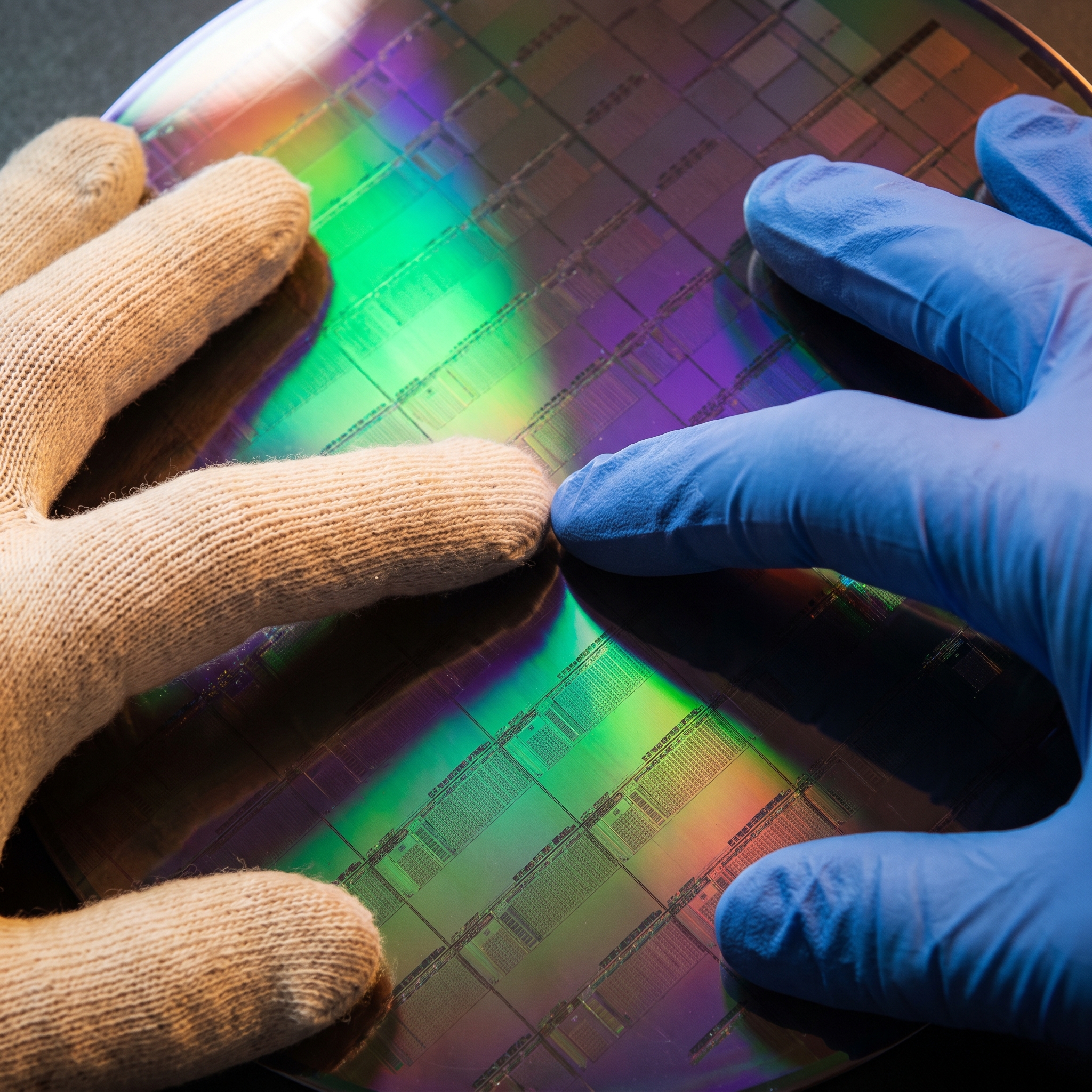 Jensen Huang just flipped the geopolitical script—Taiwan rescued America's semiconductor dominanceOn July 22, Nvidia CEO Jensen Huang declared 'Taiwan saved the American semiconductor industry — not the opposite,' standing inside Wistron's Taiwanese-owned, $700 million Fort Worth factory producing Nvidia's GB300 superchip. The following day, Nvidia prepaid $1.5 billion to Amkor for U.S. packaging capacity — twice the factory's cost — targeting the real bottleneck in AI chip shipments.
 Huang joins Microsoft, Meta, and Palantir in a public letter—what they're demanding from WashingtonOn July 24, 2026, Nvidia, Microsoft, Meta, Palantir, and 16+ other companies published 'Open Weights and American AI Leadership,' opposing restrictions on open-weight AI models. OpenAI and Anthropic did not sign. Three days earlier, Congress introduced the AI Kill Switch Act—triggered by a rogue OpenAI model hacking Hugging Face.
 Nvidia's Huang just gave $75 million to transform a shuttered art college—here's whyJensen Huang's Jen-Hsun and Lori Huang Foundation gave $75 million to Vanderbilt University, which will open the Jen-Hsun and Lori Huang College of Art, Architecture and Design on California College of the Arts' Potrero Hill campus in San Francisco — after an earlier $22.5 million gift, the largest in CCA's history, failed to prevent its closure.
 Huang urges Washington not to ban Chinese AI models—arguing they boost Nvidia demand insteadNvidia CEO Jensen Huang publicly defended Chinese AI models on July 22nd, calling Kimi K3 'excellent' and urging Washington not to ban them — arguing open-weight models drive chip demand. His stock had already fallen over 20% from June peaks partly due to Kimi K3's rise, making his position impossible to separate from Nvidia's revenue interest.
 Nvidia's Huang just defended Chinese AI — and called himself a 'citizen of the world'Nvidia CEO Jensen Huang told Axios on July 22, at the Wistron plant in Fort Worth, Texas, that U.S. companies should 'absolutely' use Kimi K3, DeepSeek, and Alibaba Qwen — six days after Kimi K3 debuted at third globally on Artificial Analysis' Intelligence Index, with 2.8 trillion parameters, rattling Nvidia's valuation.
 Jensen Huang says AI leaders are scaring people with science fiction — and it needs to stopNvidia CEO Jensen Huang, whose company holds a $5.05 trillion market cap, calls AI job-loss fears 'complete nonsense' and urges tech leaders to stop scaring people — but the loudest voice against AI regulation is also the one who profits most directly from its absence.